We are an Indigenous-led home for critical and creative research on science, technology and environment
The Labs
The Technoscience Research Unit supports Indigenous, feminist, queer, anti-racist, and anti-colonial, justice and community-based methodologies through projects, labs, and working groups. The TRU hosts two labs and a research hub.
-
The Environmental Data Justice Lab is an Indigenous lab that focuses on the relationships between data, pollution, and colonialism with a focus on Canada’s Chemical Valley, where 40% of Canada’s Petrochemicals are refined, and which is on the territory of Aamjiwnaang First Nation. The lab is dedicated to community-based and led research, and is co-led by M Murphy (Red River Metis) and Vanessa Gray (Aamjiwnaang First Nation). The lab includes students, faculty, and community researchers.
Read more →

-
The ISES Lab brings Indigenous STS and community-based methods to transform material discovery, our understanding of chemical risk, and and frameworks of ethical substance. We strive to ensure the ethical integration of Indigenous knowledges and values into research design for chemistry, chemical management, and materials discovery.
-
Indigenous contributions to science, technology, and environmental studies (STES) signal a new era of research collaboration. Fields as distinct as chemistry, AI, and pharmacy now seek to collaborate with Indigenous scholars. At the same time, Indigenous scholars are taking the lead in developing their own methods of Indigenous research suited to data and computationally driven research conditions, current and future technologies, and urgent environmental needs while transforming policies, protocols, and practices that support self-determination. The Technoscience Research Unit is committed to advancing the research in the field of Indigenous Science, Technology, and Environmental Studies (ISTES) at the University of Toronto and globally.

We are a mix of Indigenous and non-Indigenous researchers creating a decolonized and feminist research community.
The Technoscience Research Unit at the University of Toronto hosts the All Our Chemical Relations Project, which includes many partners and is funded by an NFRF-Transformation Grant
We are also a member of the Indigelab Network
Announcements
-
![]()
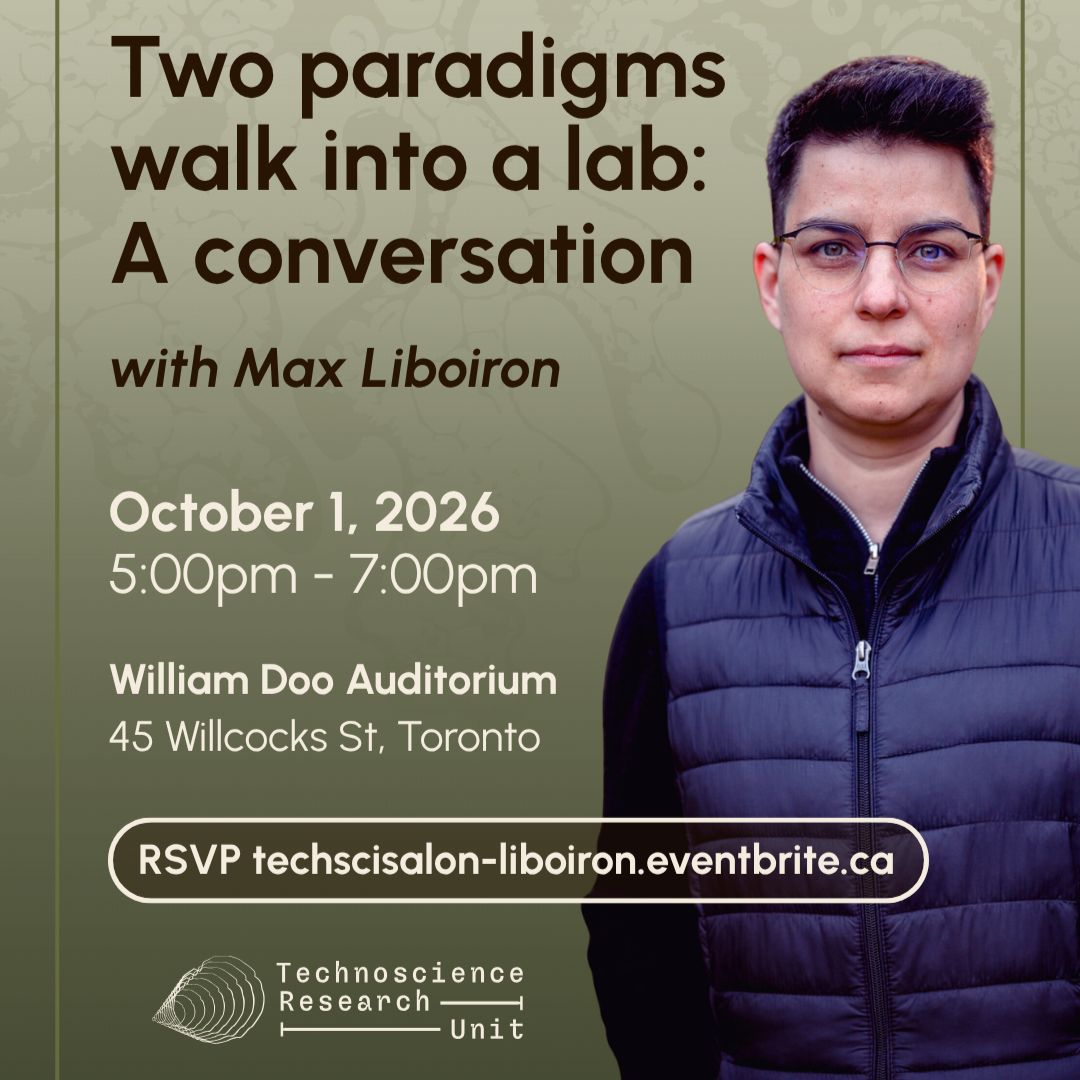
Two Paradigms Walk Into a Lab: A Conversation with Max Liboiron
The Technoscience Research Unit is excited to continue the 2026/7 Technoscience Salon Series: Indigenous Science and Ethical Grounds, an open forum for entangling intellectual and political questions about technoscience.
Join us on Thursday, October 1st from 5 - 7 pm for our first Technoscience Salon of the new academic year for "Two Paradigms Walk Into a Lab: A Conversation" with Max Liboiron.
Dr. Max Liboiron is a Professor in Geography at Memorial University, where they direct the Civic Laboratory for Environmental Action Research (CLEAR). CLEAR develops feminist and anti-colonial methodologies to study marine plastic pollution. Liboiron is author of Pollution is Colonialism (Duke University Press, 2021) and co-author of Discard Studies: Systems, Wasting, and Power (MIT Press, 2022).
-
![]()
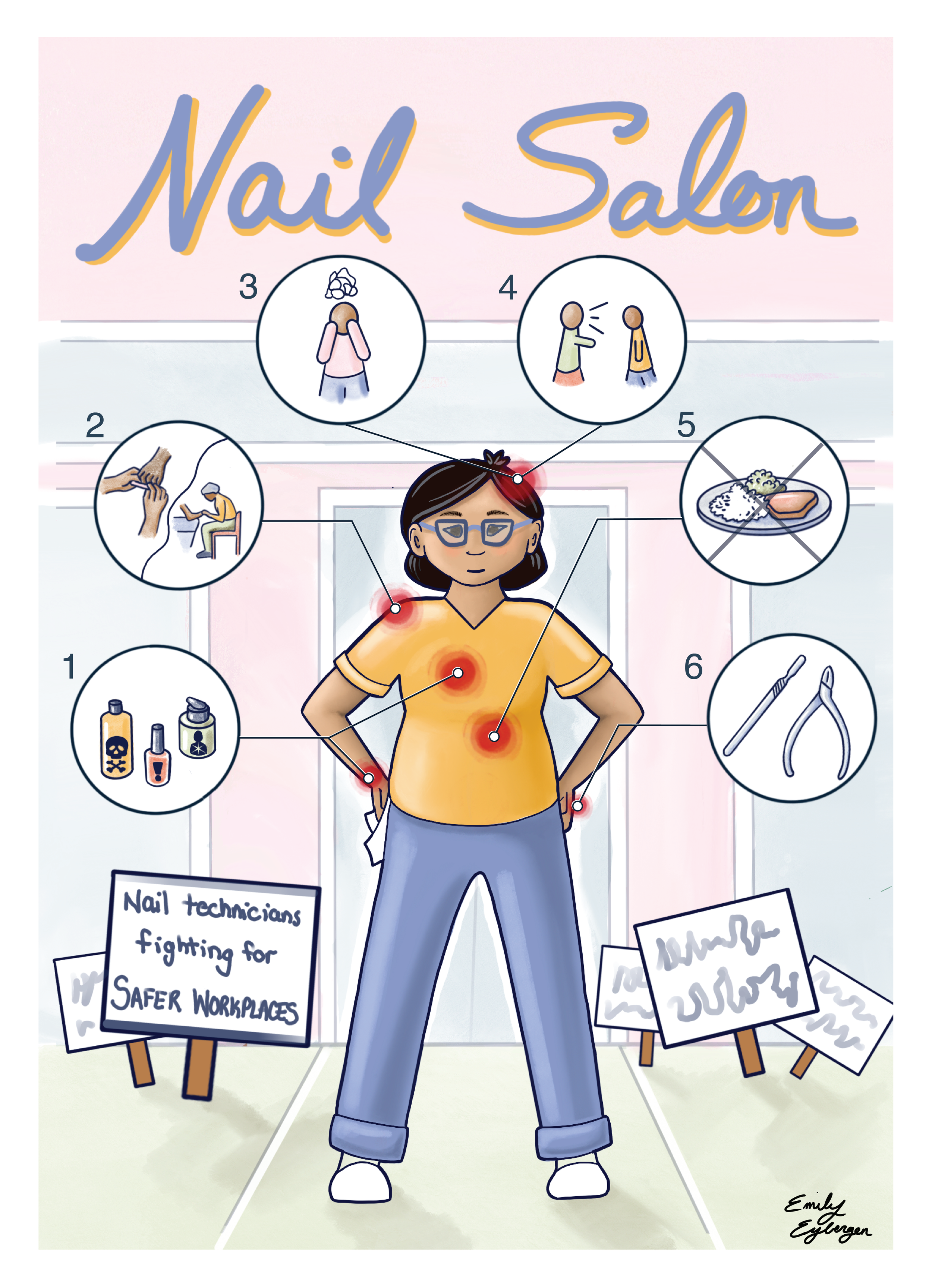
TRU Staff Scholar, Reena Shadaan awarded the Acceleration Consortium Seed Grant to support worker-governed technologies that address chemical hazards at work.
“Ethical Nail Salons: A community-governed and SDL-facilitated approach to mitigate occupational chemical hazards in nail salons” innovatively applies the principles of community-based research to materials science. The project is a community-governed collaboration of the Parkdale Queen West Community Health Centre (J. Liang, M. Woldu, S. Hakeem, M. Osman), the Nail Technicians' Network (J. Liang), the Acceleration Consortium’s SDLs (F. Gu, M. Nazeri, E. Ng), the Indigenous Science and Ethical Substance lab (R. Shadaan, M. Murphy), and the Dalla Lana School of Public Health (V. Arrandale). Collaboratively, we will develop workflows to support the creation of a safe, functional, and worker-governed nail polish as a type of “ethical substance.”
Illustration by Emily Eybergen
-
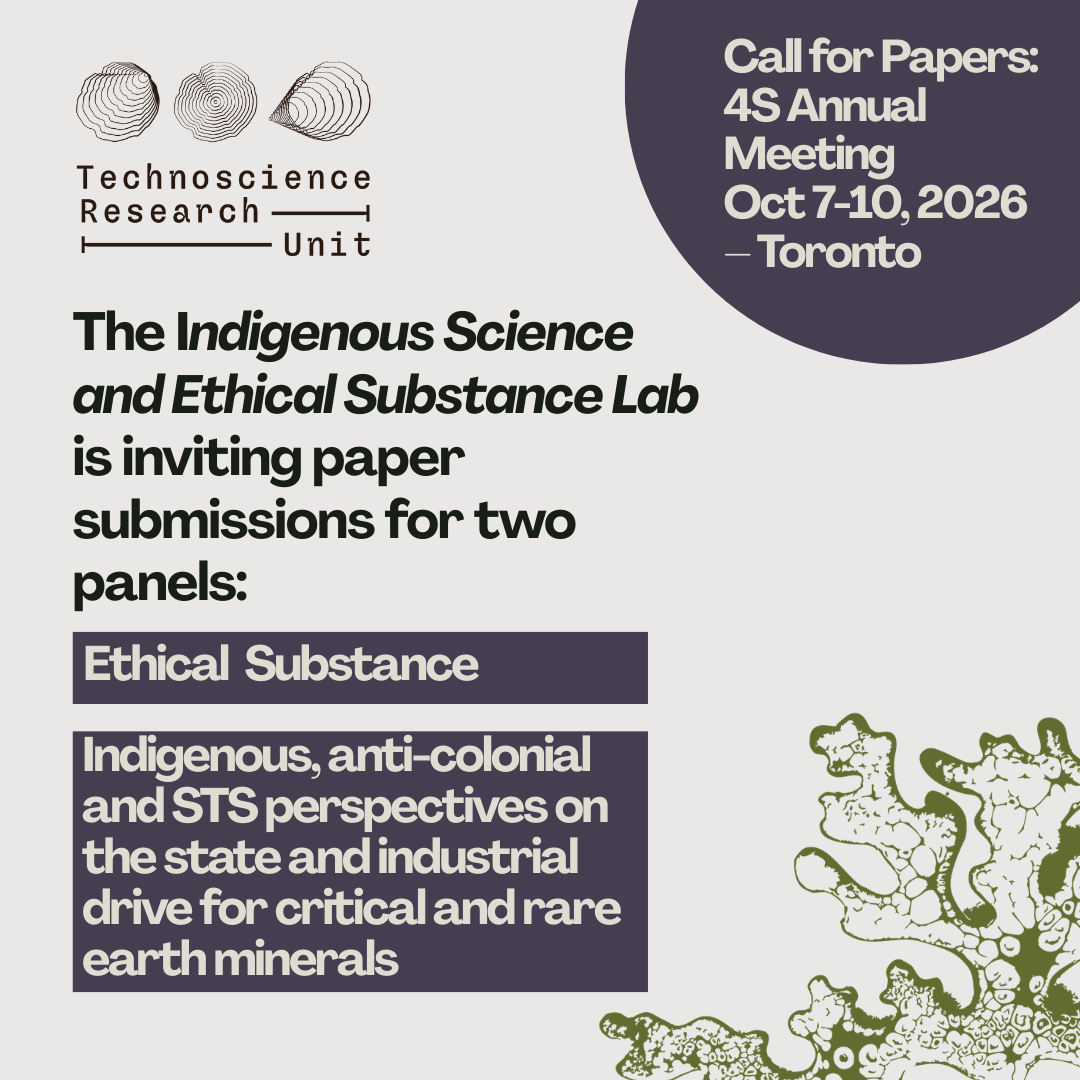
![Announcement for the 4S Annual Meeting of the American Society of Anthropology, October 7-10, 2026, in Toronto, featuring the Indigenous Science and Ethical Substance Lab calling for paper submissions for two panels on ethical substance and indigenous perspectives on critical and rare earth minerals.]()
Call for Papers: 4S Annual Meeting
We are excited to host two open panels for the upcoming 4S Conference on Technopower and Technoscientific Futures, held in Toronto, Ontario, Oct 7-10, 2026. Deadline to submit for open panels is April 30th, 2026.
The first panel is on Ethical Substance and the second panel is on Indigenous, anti-colonial and STS perspectives on the state and industrial drive for critical and rare earth minerals.
For more details about the panels and how to submit a paper, please click the link below!
-
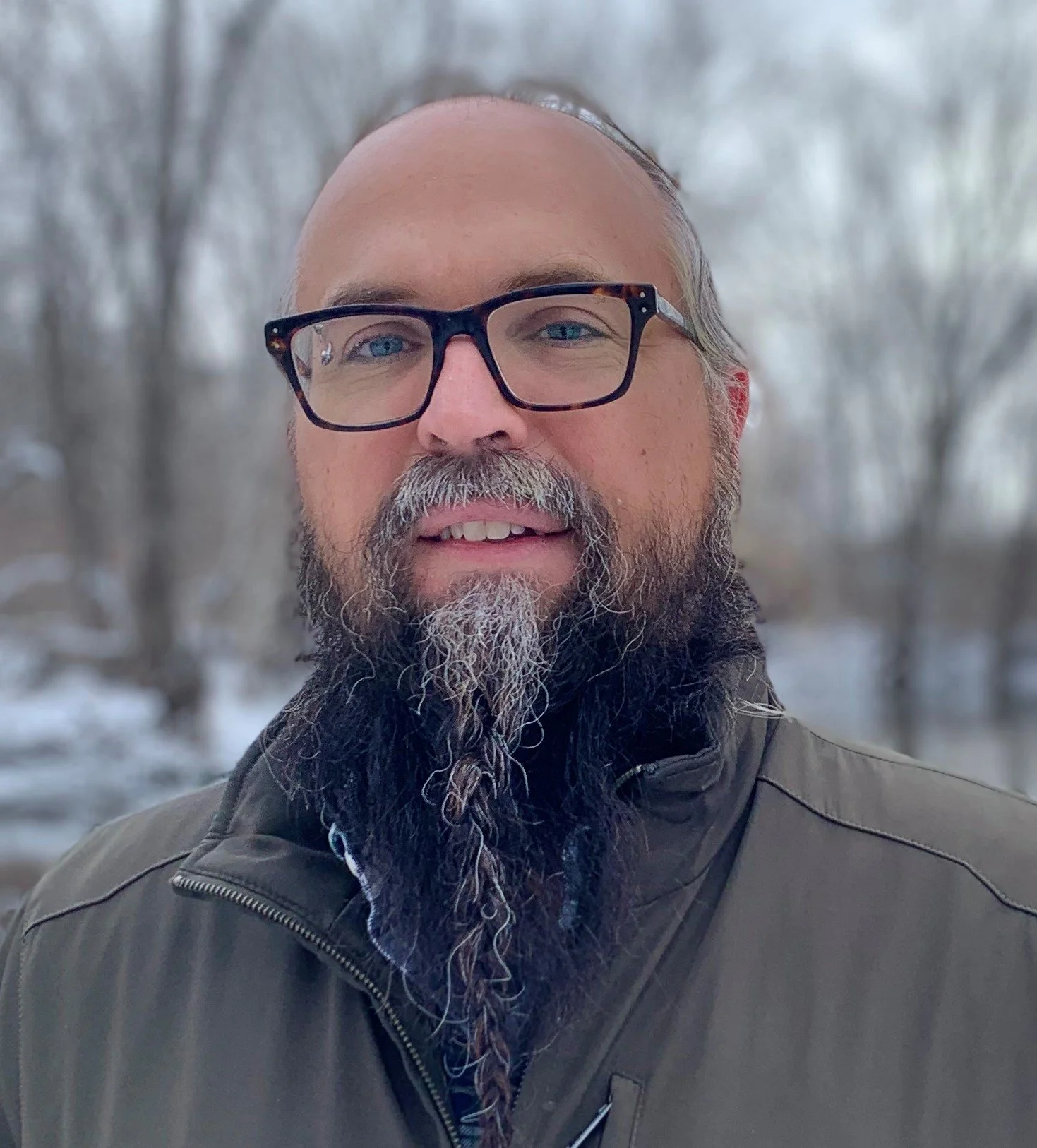
![Close-up of a man with glasses and a beard, smiling outdoors in winter with snow-covered trees in the background.]()
2025-26 Technoscience Salon :: Kyle Whyte
Join us for the last Technoscience Salon of the season on March 19, 5-7PM.
We are excited to host Dr. Kyle Whyte (Citizen Potawatomi), George Willis Pack Professor + University Diversity & Social Transformation Professor from the University of Michigan, to share stories, cases, and evidence of Indigenous methods for generating climate justice “at scale.”
This event is co-sponsored by the Centre for Indigenous Studies.
-
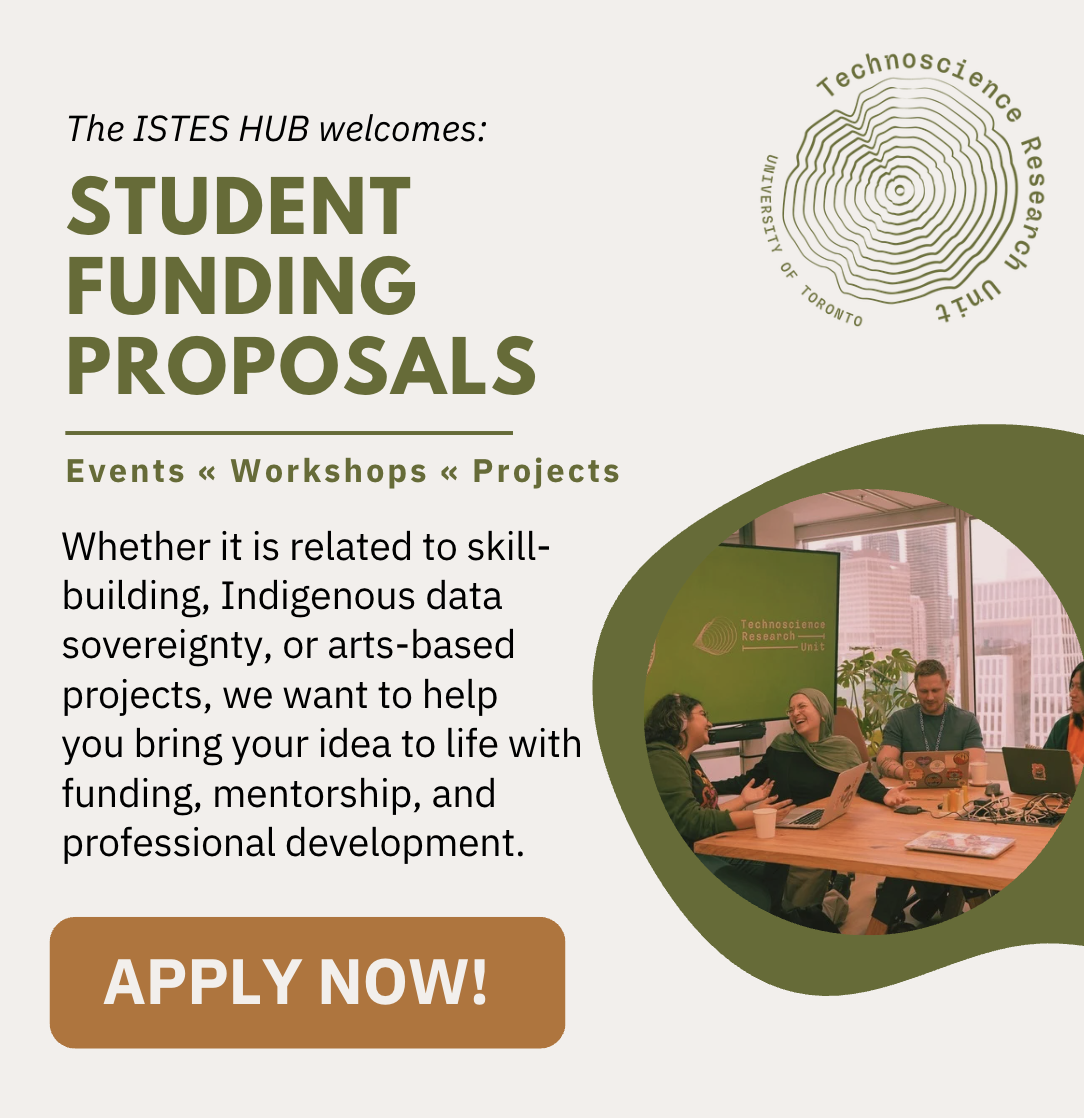
![Flyer for the ISTES HUB at the University of Toronto promoting student funding proposals. It includes info about events, workshops, and projects, with a photo of a diverse group of students in a meeting room. The university's logo is at the top right.]()
The ISTES HUB Welcomes Student Funding Proposals
Are you an undergraduate or graduate student working in or interested in Indigenous science, technology and environment studies? Do you have a great idea for an event, workshop, or community project?
Whether it is related to skill-building, Indigenous data sovereignty, or arts-based projects—we want to help you bring your idea to life with funding, mentorship, and professional development. Proposals are reviewed on a rolling basis!
-
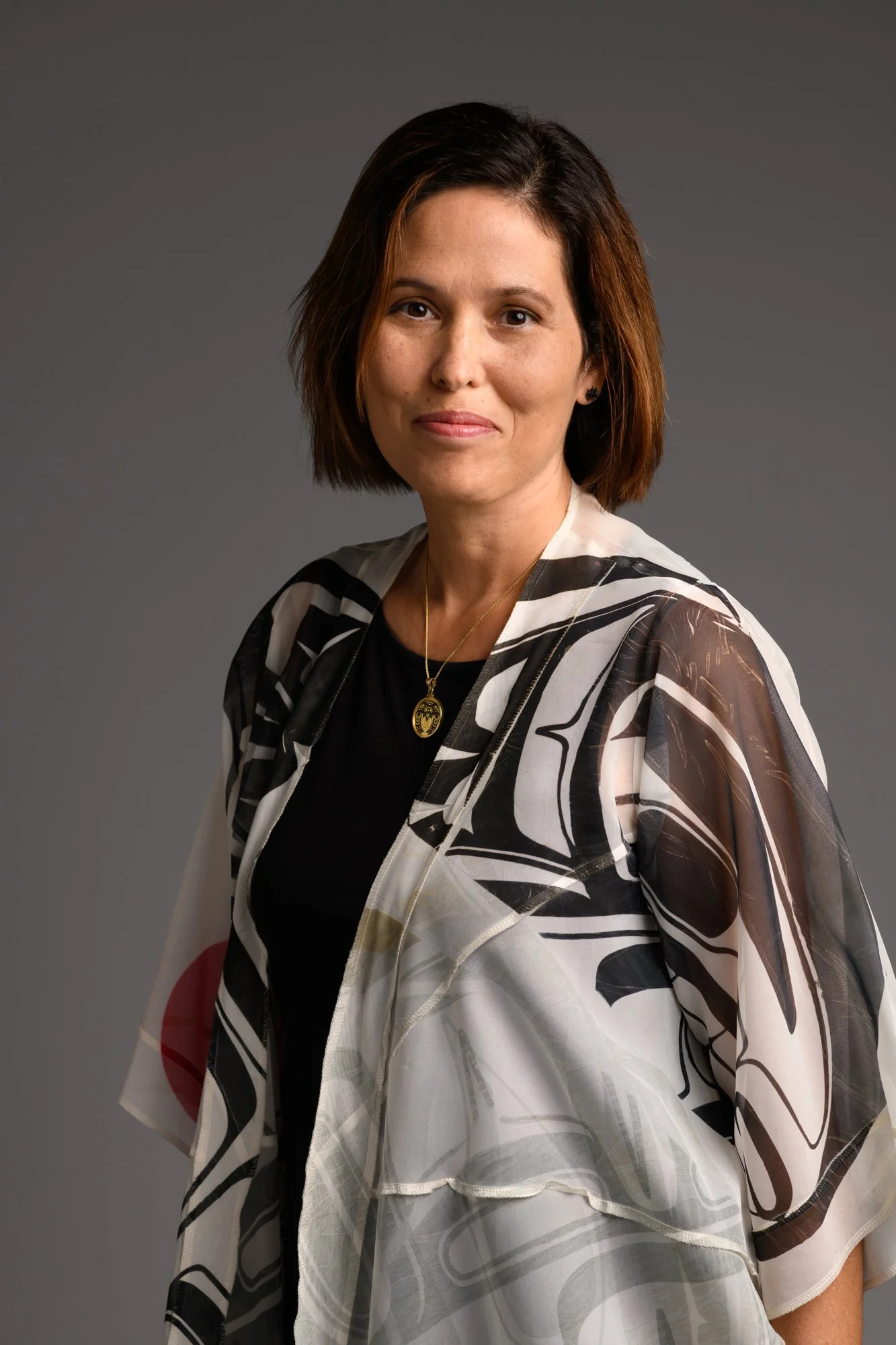
![A woman with shoulder-length brown hair wearing a black top and a sheer, patterned white and black jacket, standing against a plain gray background.]()
2025-6 Technoscience Salon :: Candis Callison
Join us on March 12, 2026 from 5-7PM for a Technoscience Salon featuring Dr. Candis Callison, Canada Research Chair in Indigenous journalism and Professor at the University of British Columbia.
Her work focuses on media practices, Indigenous journalism on digital platforms, journalism ethics, and the impact of Indigenous and environmental movements in public discourse, particularly regarding climate change.
This event is co-sponsored by the Centre for Indigenous Studies.
-
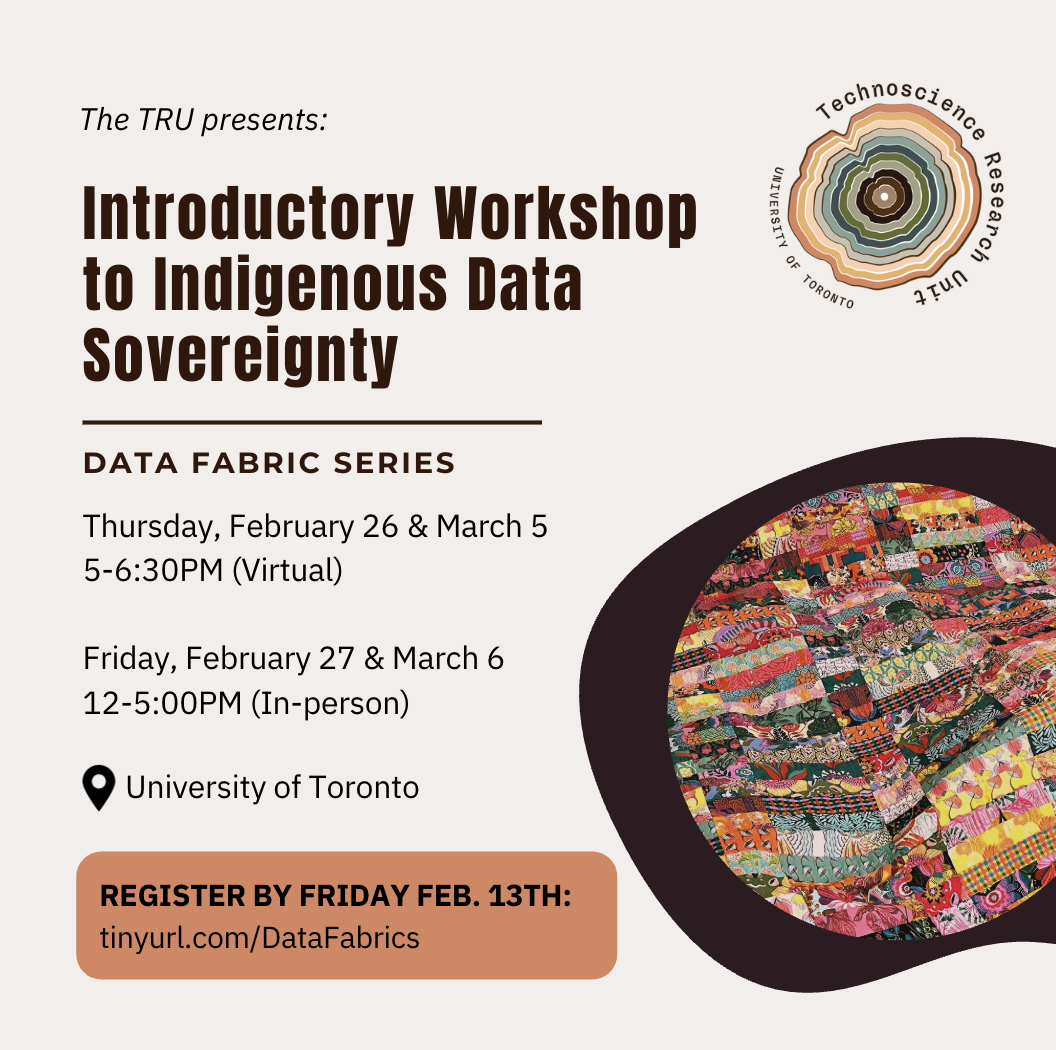
![Event poster for an introductory workshop on indigenous data sovereignty hosted by the University of Toronto, scheduled for February 26 and March 5 virtually, and February 27 and March 6 in person, with registration details included.]()
Data Fabrics: Introduction to IDSov
Join Data Fabrics, an art-based learning series that explores Indigenous Data Sovereignty and Governance through creative, relational, and hands-on approaches. The series creates spaces to think critically about data beyond colonial and institutional frameworks and toward Indigenous ways of knowing, governing, and caring for data.
-
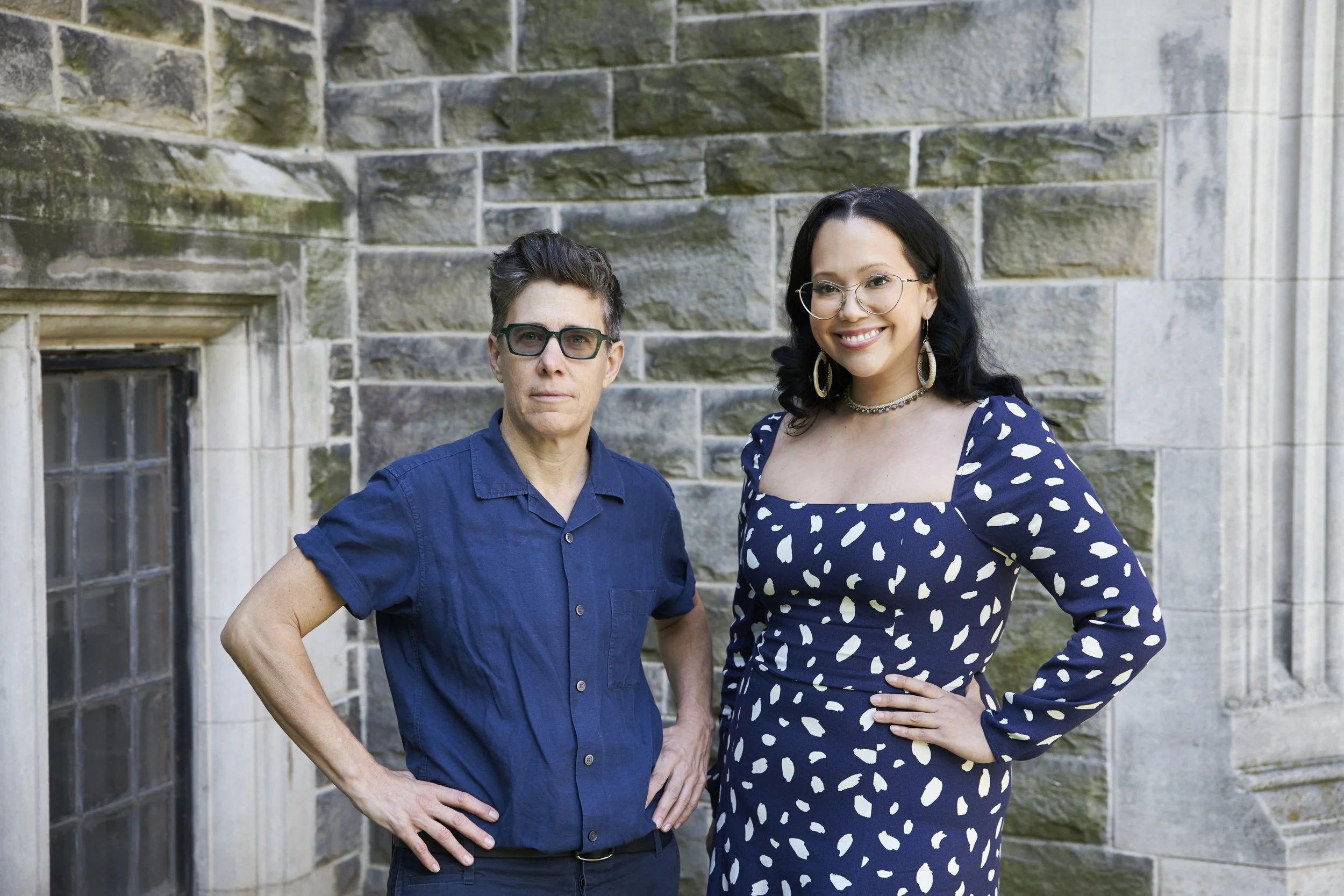
![Two women standing outdoors in front of a stone building with small windows. One woman is wearing a blue shirt and glasses, the other is wearing a navy dress with a white pattern and large earrings.]()
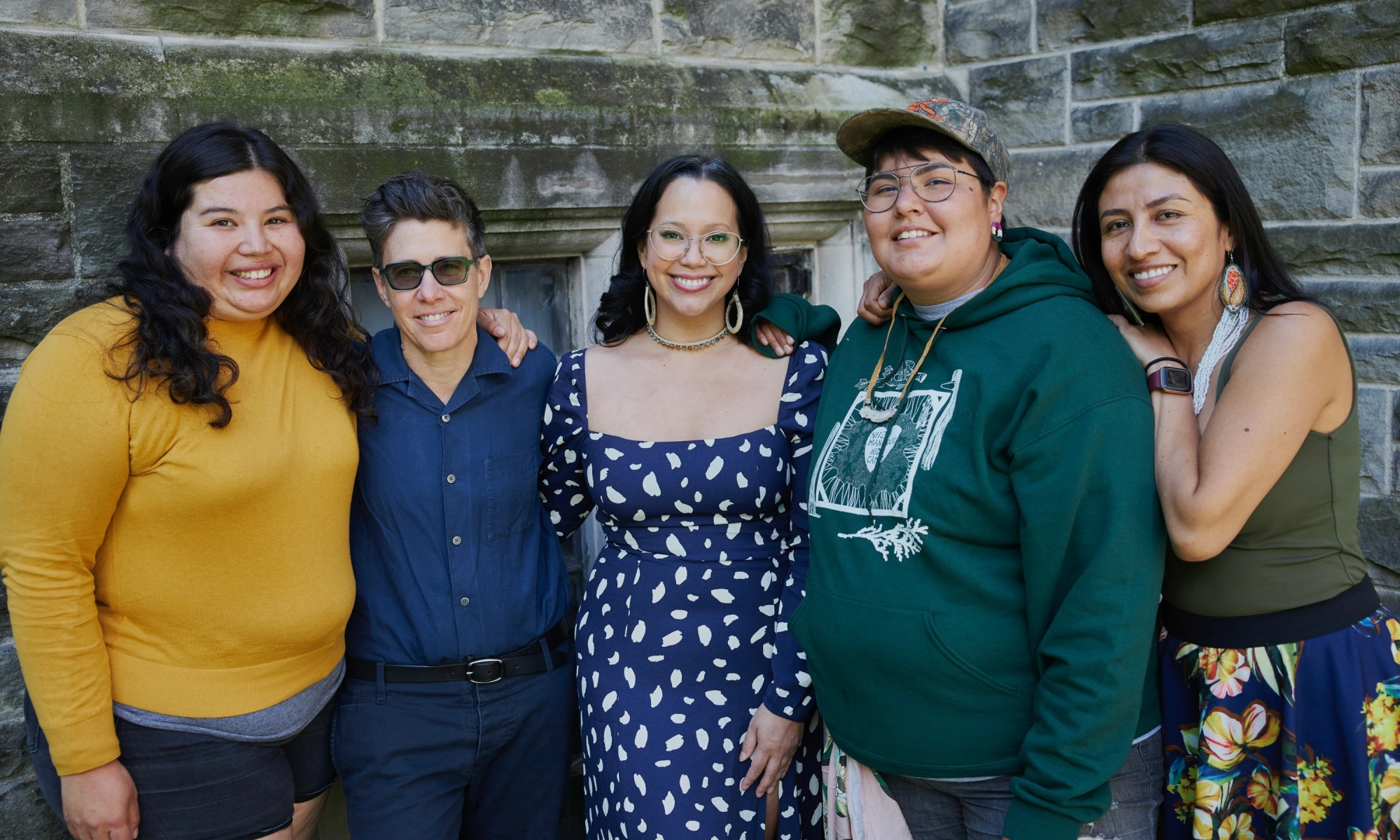
TRU to Steward $22M New Frontiers in Research Fund - Transformation Grant
Stewarded by the Technoscience Research Unit at the University of Toronto, this Indigenous-led and multi-institutional research project seeks to re-envision chemical risk management in a time of environmental crisis.
-
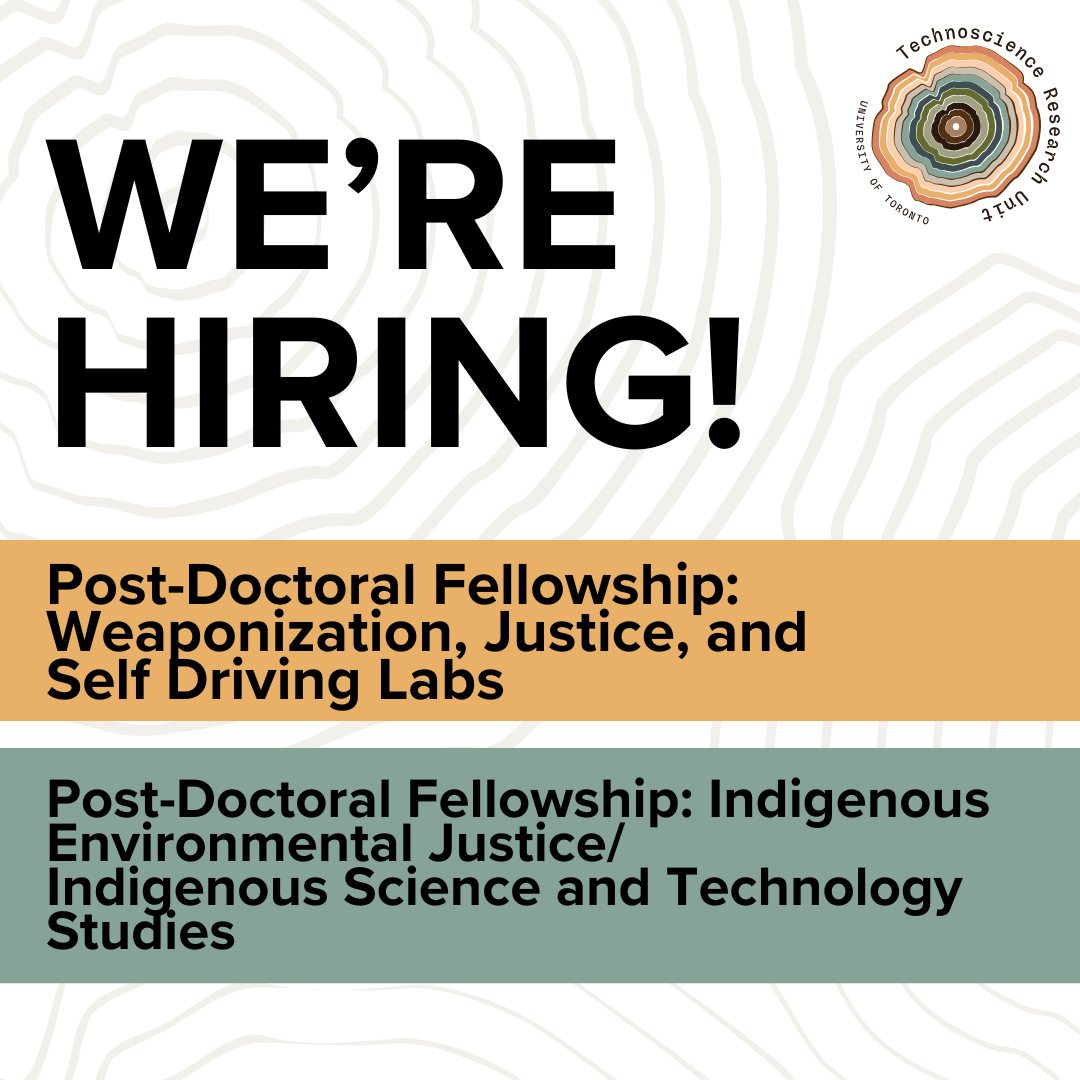
![A poster with bold black text saying 'WE'RE HIRING!' and two colored sections below listing job openings for post-doctoral fellowships in various research areas, featuring the University of Toronto's Technoscience Research Unit logo in the top corner.]()
TRU Announces Post-Doctoral Fellowship
The TRU is offering two Post-Doctoral Fellowships; one in the area of Weaponization, Justice, and Self Driving Labs and another in Indigenous Environmental Justice / Indigenous Science and Technology Studies.
Applications are due Feb. 2nd, 2026.
-
![A wooden drawer partially open, showing tubes of small rhinestones or beads in various colors laid out inside.]()
Winter Beading Circle at the ISTES Hub
Join us Feb 5, March 5 and April 2 for beading. All supplies, including new and antique seed beads, will be provided plus lunch and tea.
-
![Close-up of a smiling woman with long brown hair wearing black glasses and a black zip-up jacket in an indoor setting.]()
2025-26 Technoscience Salon :: Jessica Kolopenuk and Ricky W. A. Smith
On January 14, 2026, Dr. Jessica Kolopenuk (University of Alberta) and Ricky W. A. Smith (George Mason University) joined us on for a discussion on the coloniality of research ethics.
-
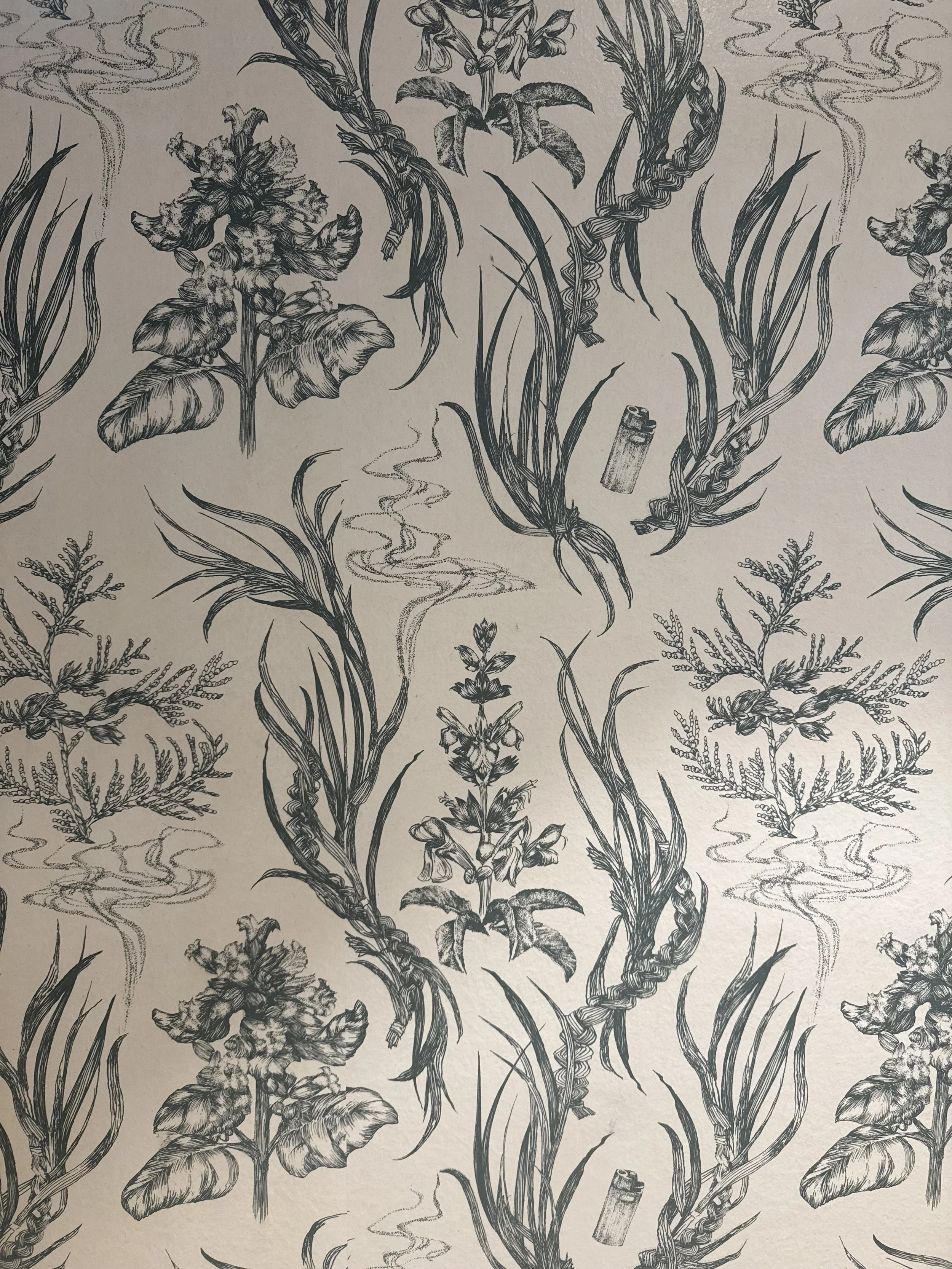
![Black and white pattern featuring flowers, leaves, grass, clouds, and a lighter scattered throughout the design.]()
TRU to Launch Indigenous Science, Technology and Environment Hub
On November 12, 2025, TRU launched the Indigenous Science, Technology, and Environments Studies Research Hub (the ISTES Hub) at the University of Toronto.
-
![Portrait of a smiling woman with long dark hair, wearing a navy blue top, a white cardigan, and jewelry, standing outdoors with green foliage in the background.]()
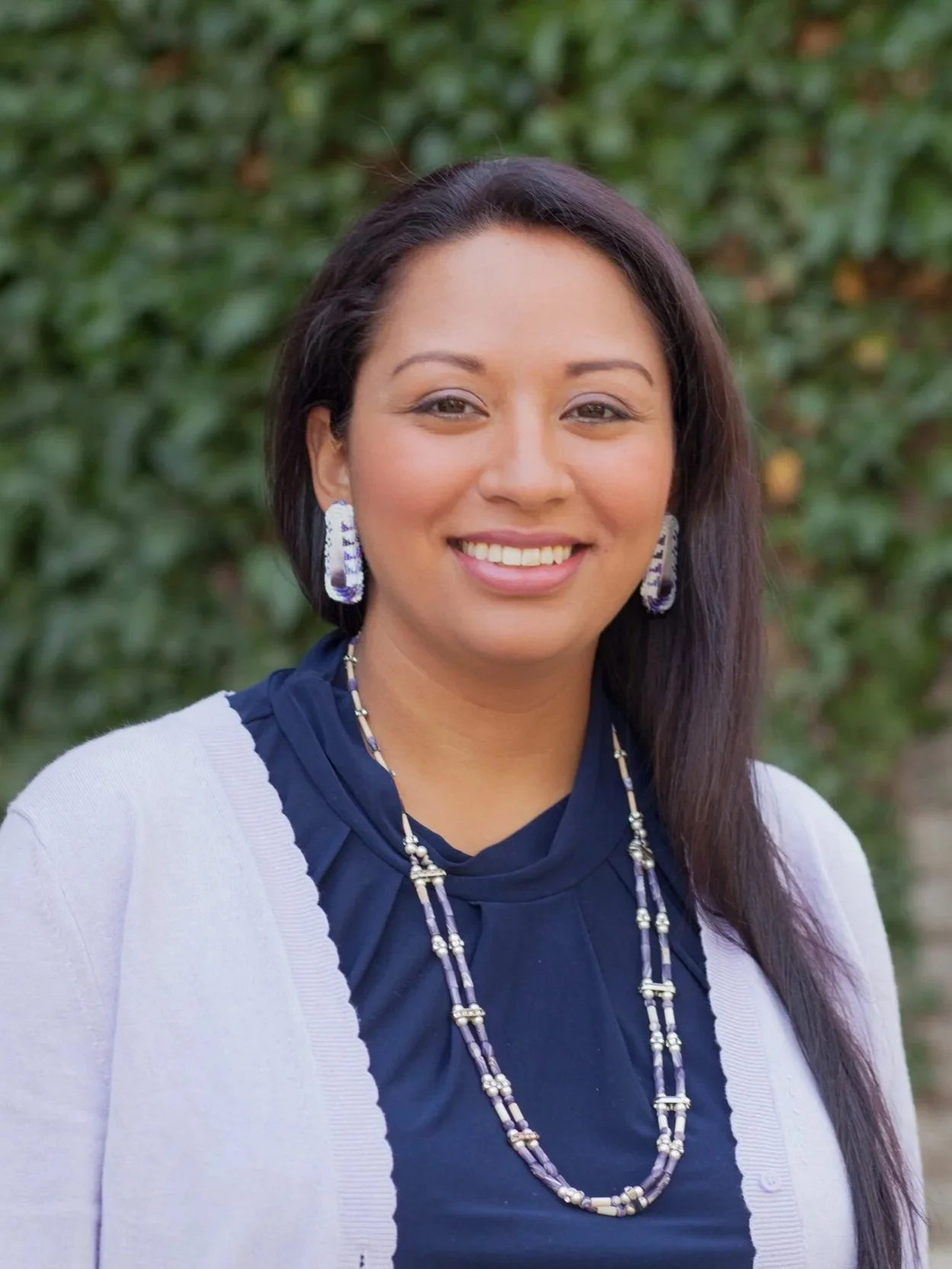
2025-26 Technoscience Salon :: Kelsey Leonard
On November 12, 2025, we held our first Technoscience Salon of 2025-26 ft. Dr. Kelsey Leonard is a water scientist, legal scholar, policy expert, writer, and enrolled citizen of the Shinnecock Nation. Her work focuses on Indigenous water justice and its climatic, territorial, and governance underpinnings for our shared sustainable future. She holds the Canada Research Chair in in Indigenous Waters, Climate and Sustainability.
-
![A woman with long black hair and tattoos on her arms rests her chin on her hand while sitting at a wooden table with a notebook, pen, and other art supplies. Behind her, there is a colorful painting on the wall and a microscope.]()
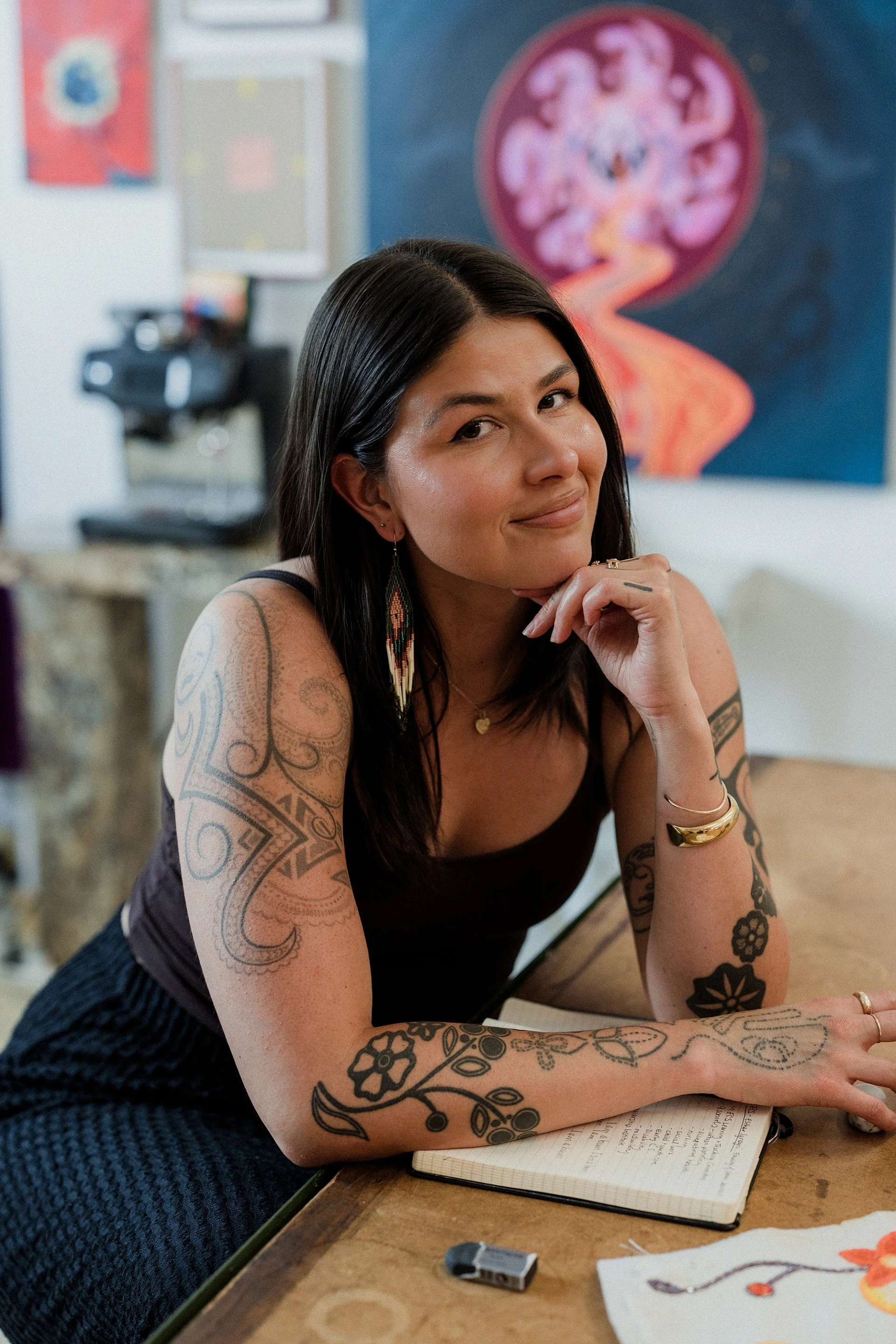
On Wholeness Book Launch with Quill Christie-Peters
On November 1, 2025, Another Story Bookshop and the Technoscience Research Unit presented the Toronto launch of On Wholeness: Anishinaabe Pathways to Embodiment and Collective Liberation (House of Anansi) by Quill Christie-Peters, with special guests Al Hunter and Jana Rae-Yerxa.
-
![]()
IEDJ Publication Announcement
M. Fernanda Yanchapaxi and M. Murphy have co-authored “Indigenous Environmental Data Justice: Confronting Colonial Data and Activating Indigenous Sovereignty.” This article describes what is Indigenous Environmental Data Justice (IEDJ) and elaborates on data practices (including our lab’s work) that Indigenous communities have developed in response to structures of colonial environmental datafication. Their work highlights the work of communities toward Indigenous data governance and alongside the principles of Indigenous Data Sovereignty.
-
![Industrial plant with smoke stacks seen through trees and foliage]()
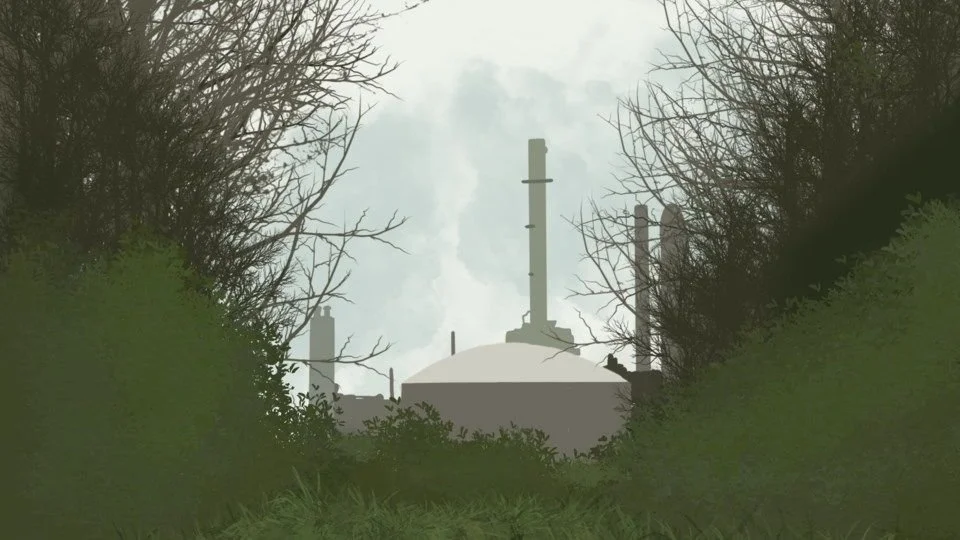
Community Publications from Aamjiwnaang
The Environmental Data Justice Lab (Vanessa Gray, Beze Gray, Joel Piche, and Layla El-Dakhakhni) have brought forward two new publications that share some of the environmental and chemical relations of those who live in Aamjiwnaang First Nation. OPINION: Understanding Our Surroundings – Tanks and COMMUNITY VOICE: Suncors’ Crude Oil Spill on the Gchigami-Ziibii (St.Clair River)
-
![Colorful flower with a pair of red lips in the center, surrounded by doodles of hands with red nails, hearts, stars, and various drawings including a clock, dollar signs, and pens.]()
ISTES Publication Announcement
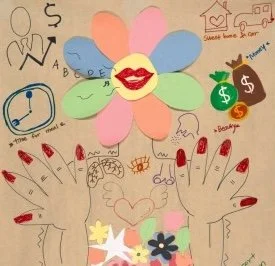
Our staff scholar, Dr. Reena Shadaan, draws on arts-based research approaches with her latest single-author paper, “‘It’s a mixture of emotions’: Nail technicians’ visual storytelling of work and health.” This publication centers participants' own imagery and narratives, shifting chemical relations from the laboratory to where people encounter them in their daily lives.
-
![Cover of Catalyst magazine featuring a collage of a butterfly with what appears to be textured, abstract art elements on its wings, with text highlighting feminism, theory, technoscience and a special section on Frictions of Futurity in Transplant Medicine.]()
Celebrating 10 years of Catalyst!
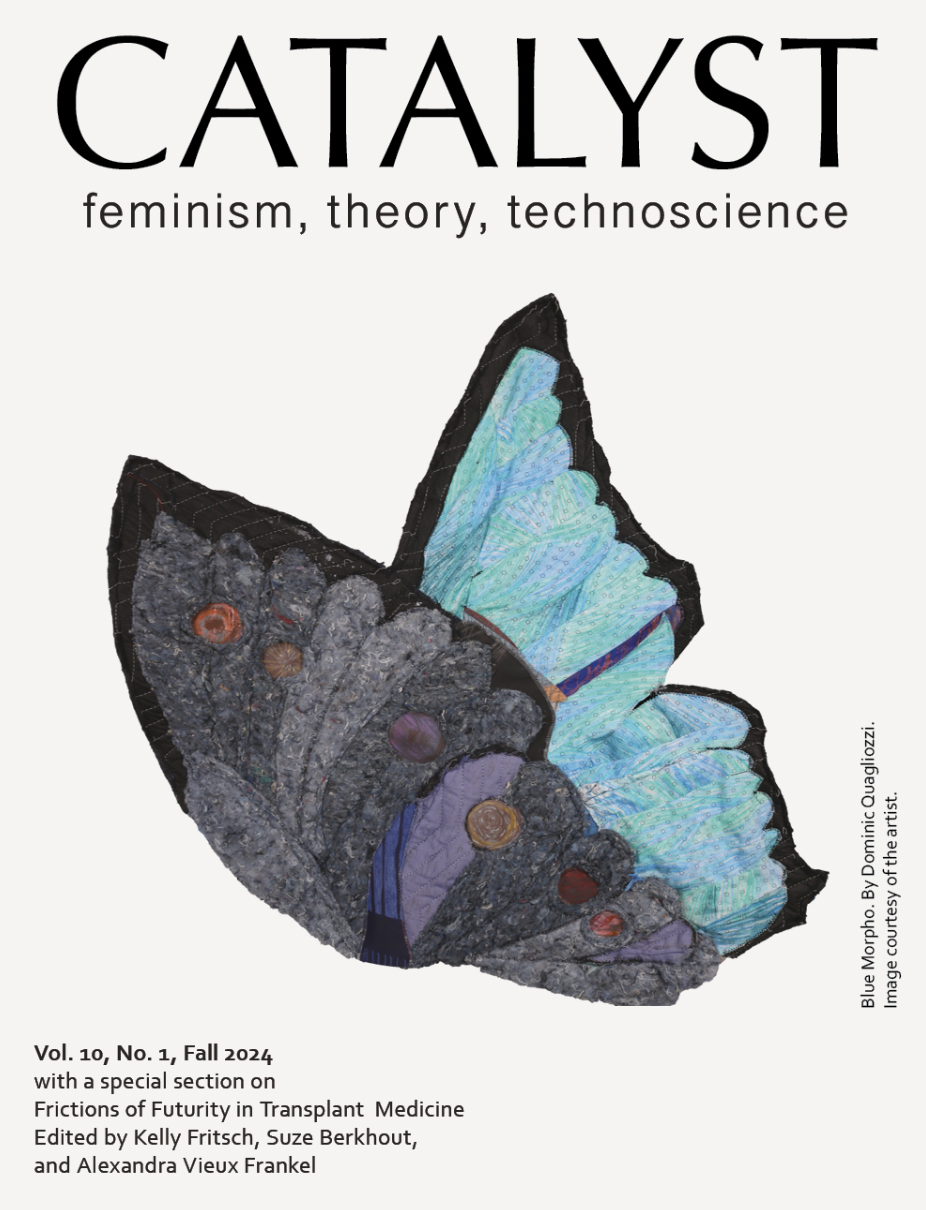
The tenth anniversary of Catalyst: Feminism, theory, technoscience marks a significant milestone in critical scholarship at the intersection of feminist studies, science and technology studies (STS), and critical theory. Catalyst invites scholars, activists, and artists to contribute to the anniversary in a myriad of ways.
-
![Colorful digital artwork of a person with a feather in their hair, wrapped in vibrant clothing, set against an abstract landscape with a city skyline, rolling hills, trees, and a pink sun in the sky.]()
Special Report: Data Colonialism in Canada's Chemical Valley
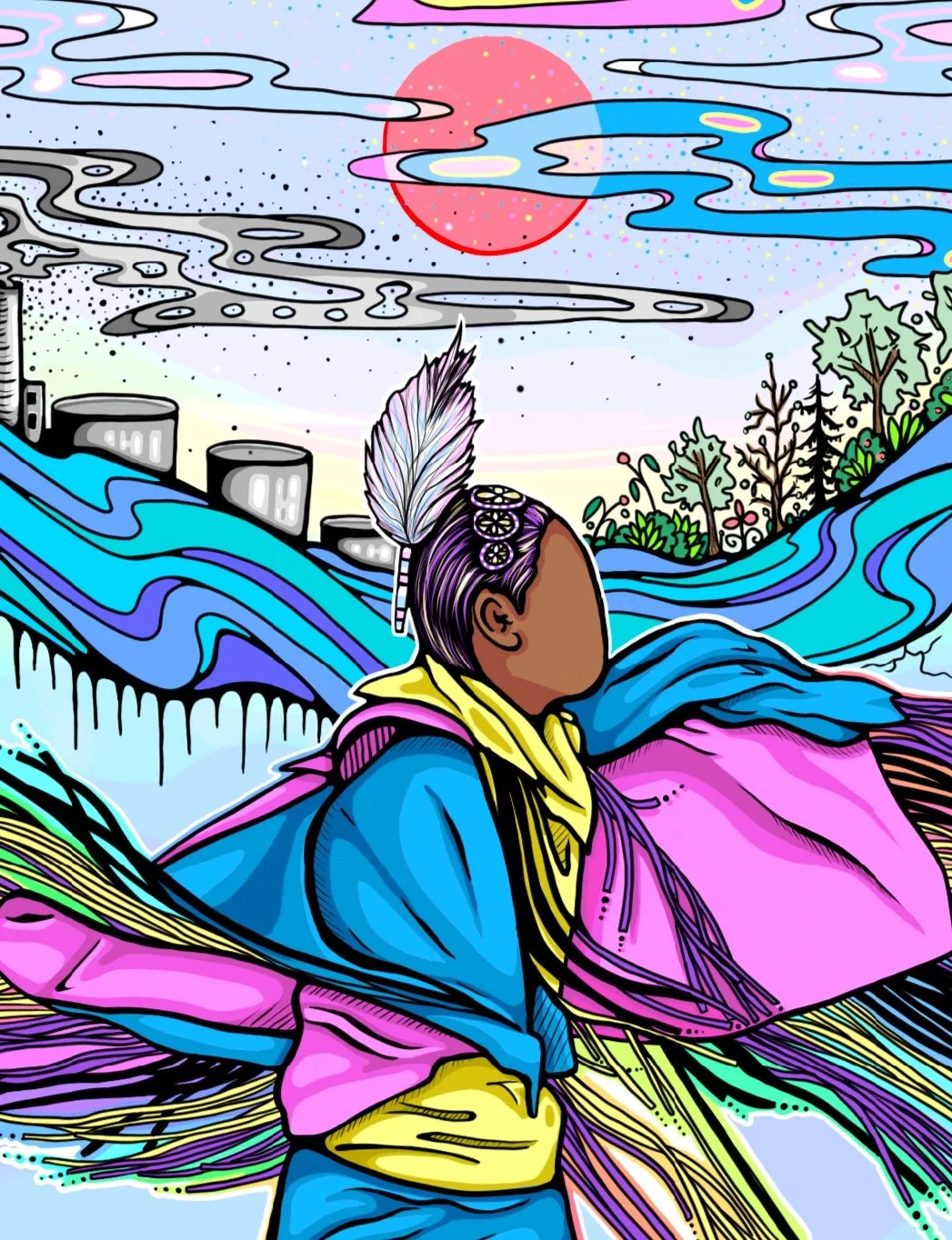
A collaborative effort with the Yellowhead Institute, this special report describes the permission-to-pollute system in Chemical Valley, explains how industry manipulates data, and looks to community members of Aamjiwnaang First Nation for alternatives to data colonialism.
-
![Three smartphones displaying environmental and health-related app screens against an orange background with white abstract lines]()
Pollution Reporter 2.0
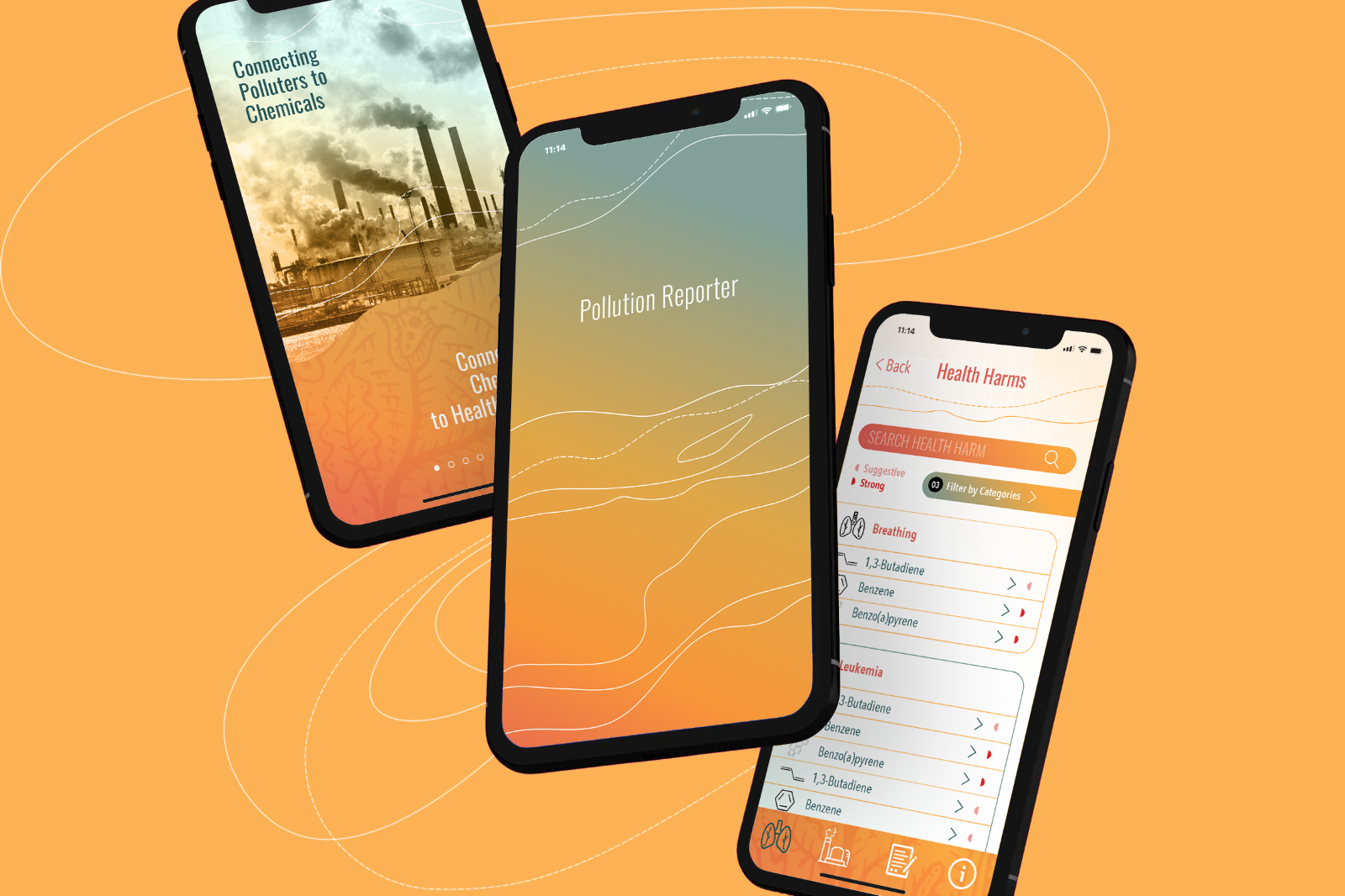
The Pollution Reporter 2.0 App translates and connects government, industry-reported, and peer reviewed sources of data into accessible information about the known health effects of pollutants. You can search by polluter, by chemical pollutant or by health category or symptom. The app assists in attaching responsibility for health harms to chemicals and the corporations that make them.
-
![Aerial view of an industrial area with factories, smokestacks, and train tracks along a river, with a woman speaking at an indoor event in a small inset on the bottom right.]()
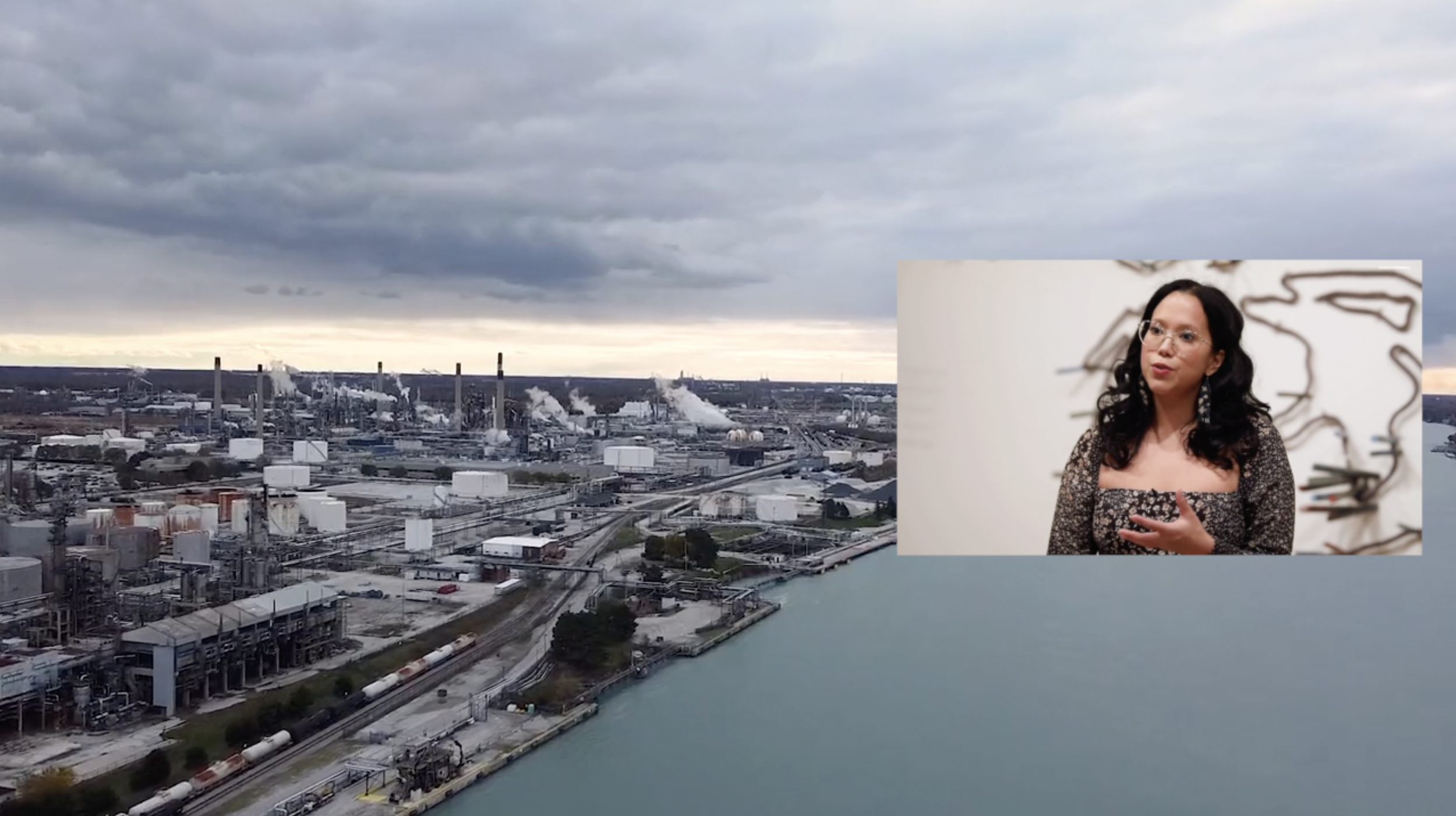
Kristen Bos featured on UofT’s Groundbreakers Series
Listen to our co-director speak on “AI, Tech, and Social Justice” and about the research that we are conducting in the field of Indigenous Science, Technology & Environment Studies (ISTES).
-
![A man with dreadlocks and a beard wearing a shirt with the word 'Tomato' on it, standing in front of a bookshelf filled with books.]()
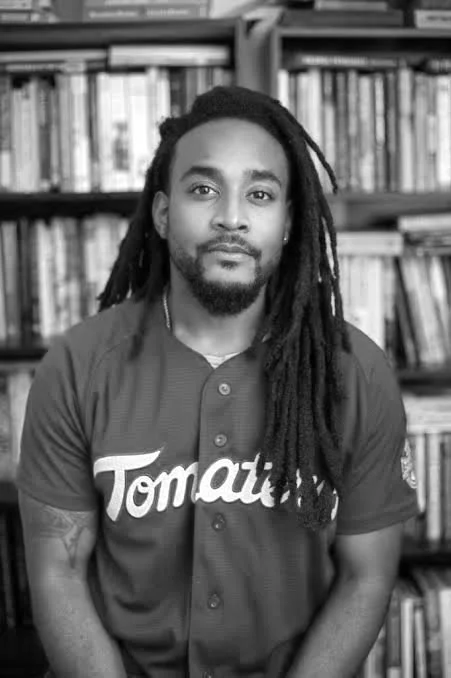
2025 Technosceince Salon: Jayson Maurice Porter
Dr. Jayson Maurice Porter delivered the final lecture for the 2025 Technoscience Salon: What is a Chemical? His talk on arsenic, race, and empire was part of our ongoing inquiries into what a chemical is and how it might be recognized, apprehended, and manipulated.
-
![A colorful promotional poster for a book tour titled 'A Woman is a School' in Toronto, featuring images of authors Tai Salih Red Maat and Samira Mohyedddin, and logos of the University of Toronto, TRU TechnoScience Research Unit, and Type Books.]()
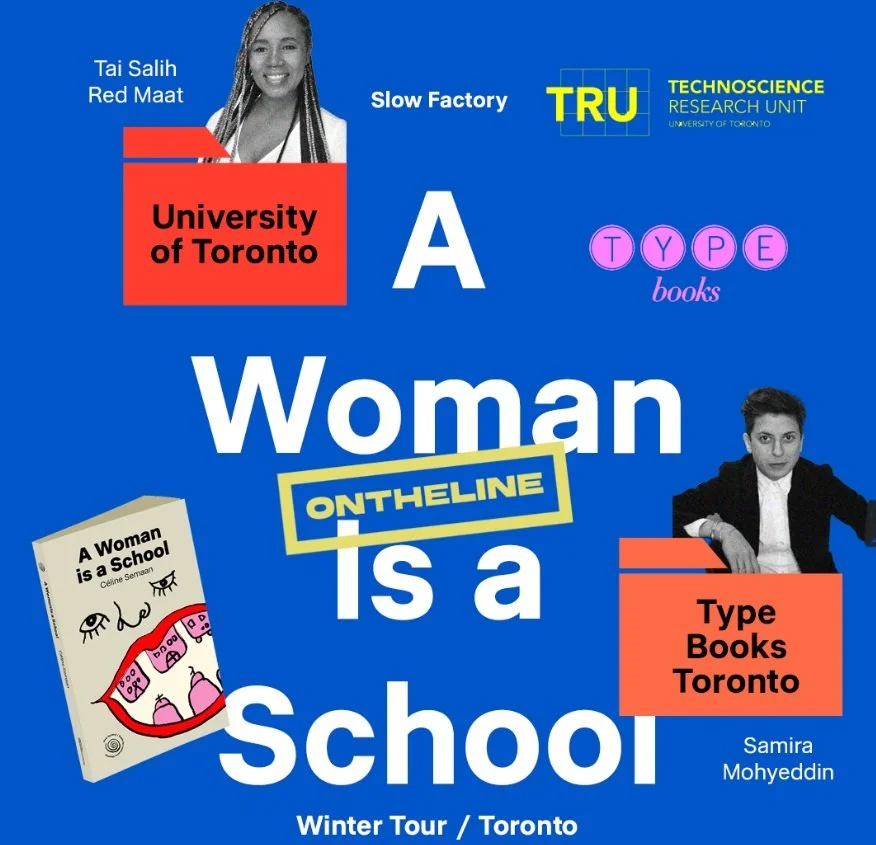
We hosted the Slow Factory's Céline Semaan for "A Woman is a School" Book Tour
In February, we hosted "A Woman is a School" Toronto book launch and panel with author and Slow Factory founder Céline Semaan, in conversation with Samira Mohyeddin from On The Line Media and Tai Salih from The Red Ma'at Collective.