
Delve into our
Research
Featured Publications
The TRU’s collection of publications include materials that come out of our projects, as well as publications that are authored and coauthored by TRU members (past and present) that align with our research areas and values.
The TRU’s Data Protocol
Yanchapaxi, M. F., & Wemigwans, J., Technoscience Research Unit. Data Protocol (Toronto: Technoscience Research Unit, 2026)
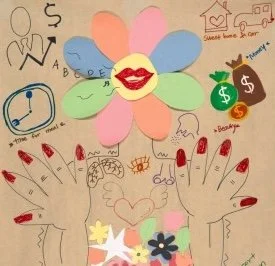
It’s a Mixture of Emotions”: Nail Technicians’ Visual Storytelling of Work and Health
Shadaan, Reena. ““It’s a Mixture of Emotions”: Nail Technicians’ Visual Storytelling of Work and Health.” Qualitative Research in Medicine & Healthcare 9, no. 1 (2025): 1–11. https://doi.org/10.1016/j.qrmh.2025.100003
Understanding Our Surroundings — Tanks
Gray, Beze, Joel Piche, Layla El‑Dakhakhni, and Vanessa Gray. “Understanding Our Surroundings — Tanks.” The Journal: Serving Sarnia‑Lambton, March 12, 2025. https://www.thesarniajournal.ca/opinion/opinion-opinion-understanding-our-surroundings-tanks-10364915.
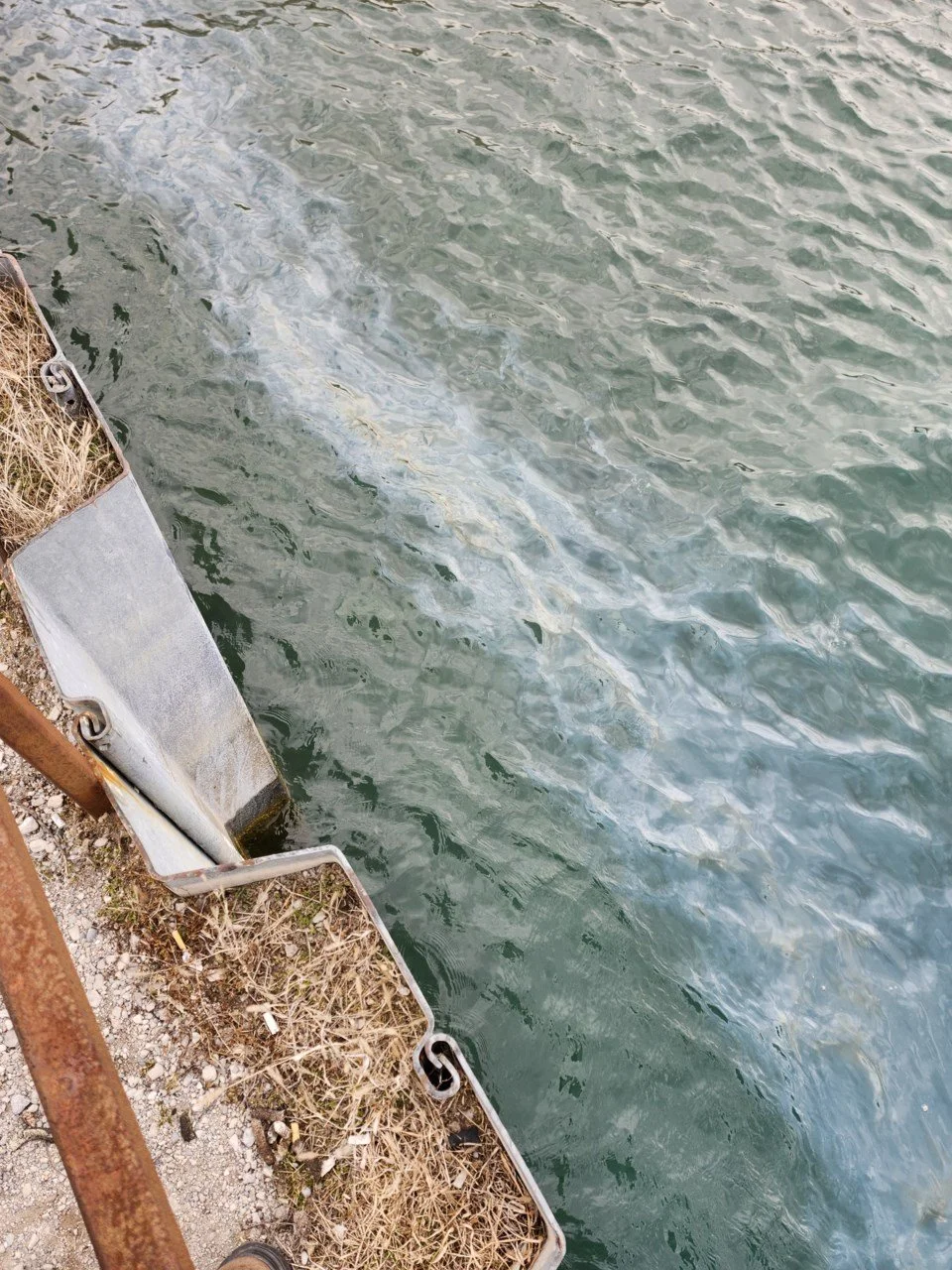
COMMUNITY VOICE: Suncors’ Crude Oil Spill on the Gchigami-Ziibii (St.Clair River)
Gray, Beze, Joel Piche, Layla El‑Dakhakhni, and Vanessa Gray. “Community Voice: Suncor’s Crude Oil Spill on the Gchigami‑Ziibii (St. Clair River).” The Journal: Serving Sarnia‑Lambton, April 25, 2025. https://www.thesarniajournal.ca/opinion/community-voice-suncors-crude-oil-spill-on-the-gchigami-ziibii-stclair-river-10563617
Orienting the Sustainable Management of Chemicals and Waste toward Indigenous Knowledge
Ataria, James M., M. Murphy, Deborah McGregor, Susan Chiblow, Bradley J Moggridge, Daniel C. H Hikuroa, Louis A Tremblay, Gunilla Öberg, Virginia Baker, and Bryan W Brooks. “Orienting the Sustainable Management of Chemicals and Waste toward Indigenous Knowledge.” Environmental Science & Technology 57, no. 30 (2023): 10901–3.
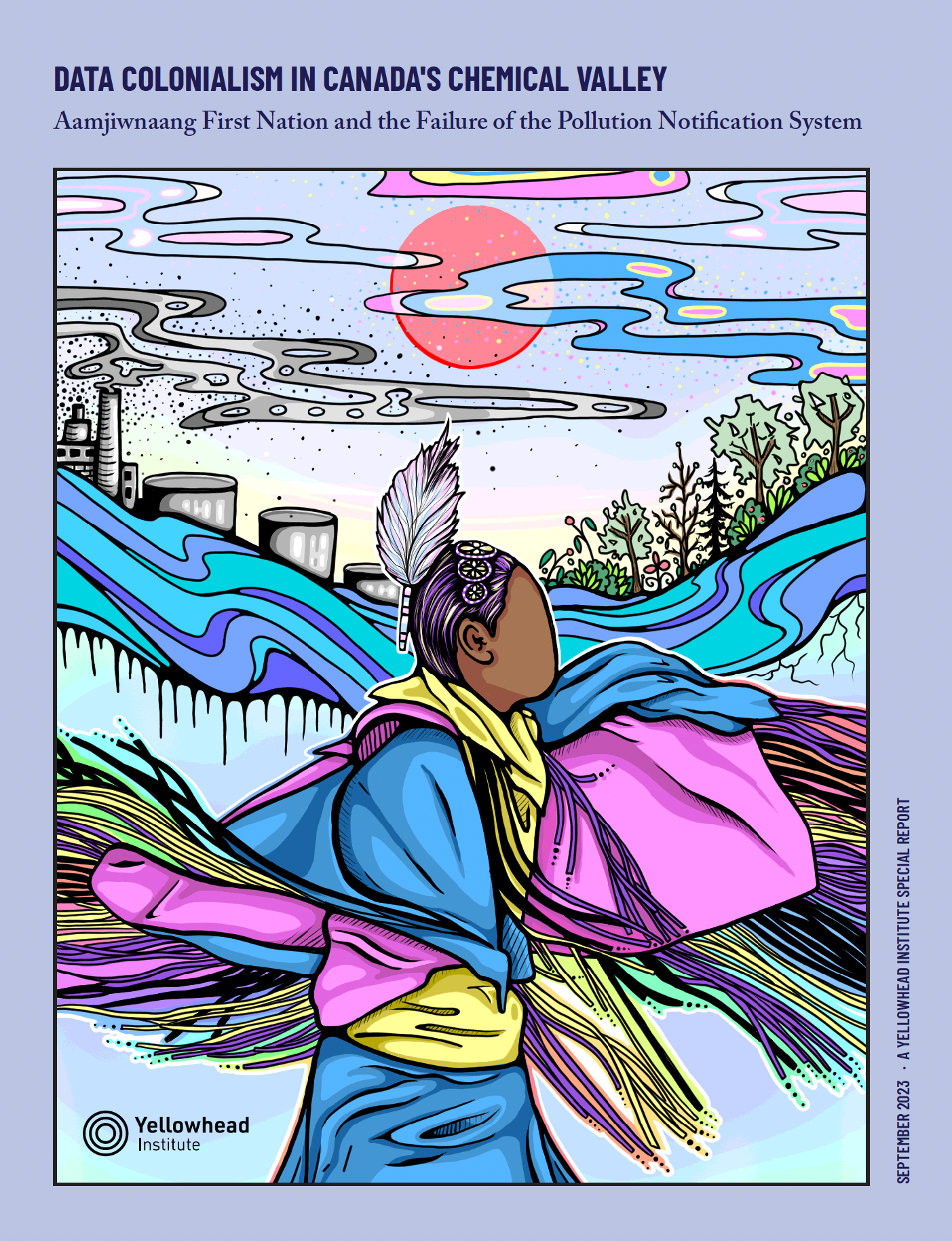
Data Colonialism in Canada’s Chemical Valley
Gray, Vanessa, Beze Gray, Fernanda Yanchapaxi, Kristen Bos, and M Murphy.
Special Report published with The Yellowhead Institute, September 2023.
Fear of a dead white planet
More Worlds Collective, Masco, J., Choy, T., Jake, & Murphy, M. (2025). Fear of a dead white planet. Duke University Press.
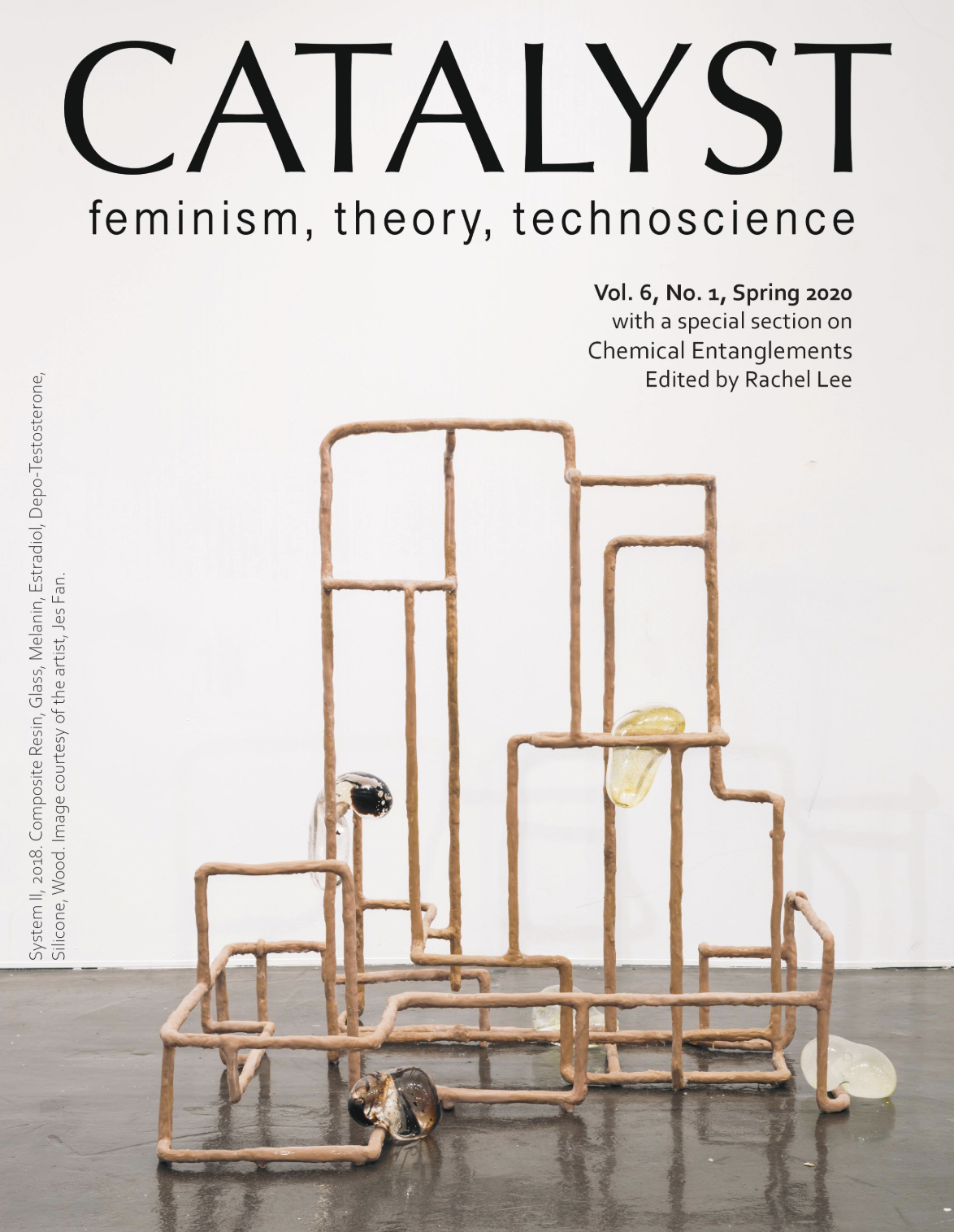
EDC’s as Industrial Chemicals and Settler Colonial Structures: Towards a Decolonial Feminist Approach
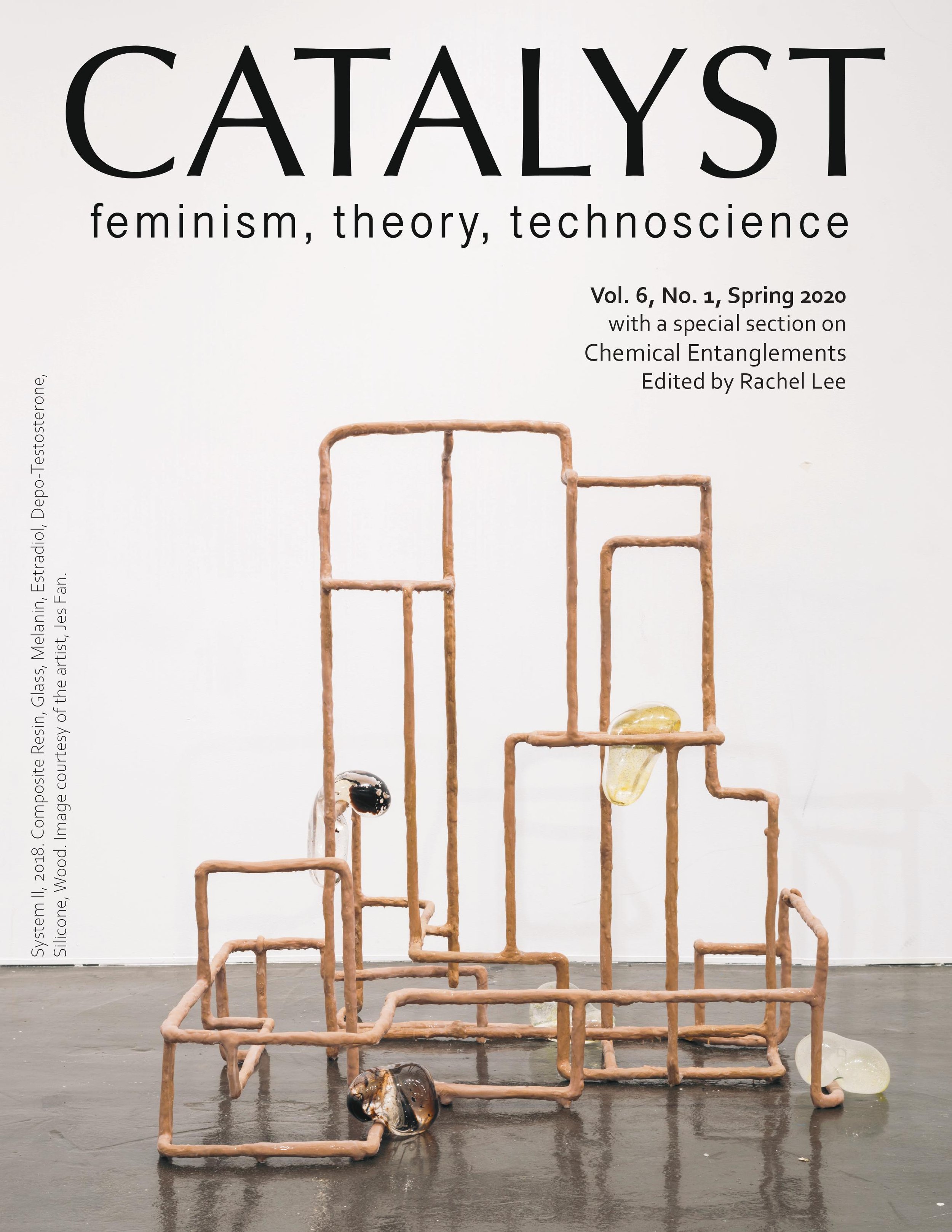
Shadaan, Reena, and M. Murphy. “EDC’s as Industrial Chemicals and Settler Colonial Structures: Towards a Decolonial Feminist Approach.” Catalyst (San Diego, Calif.) 6, no. 1 (2020).
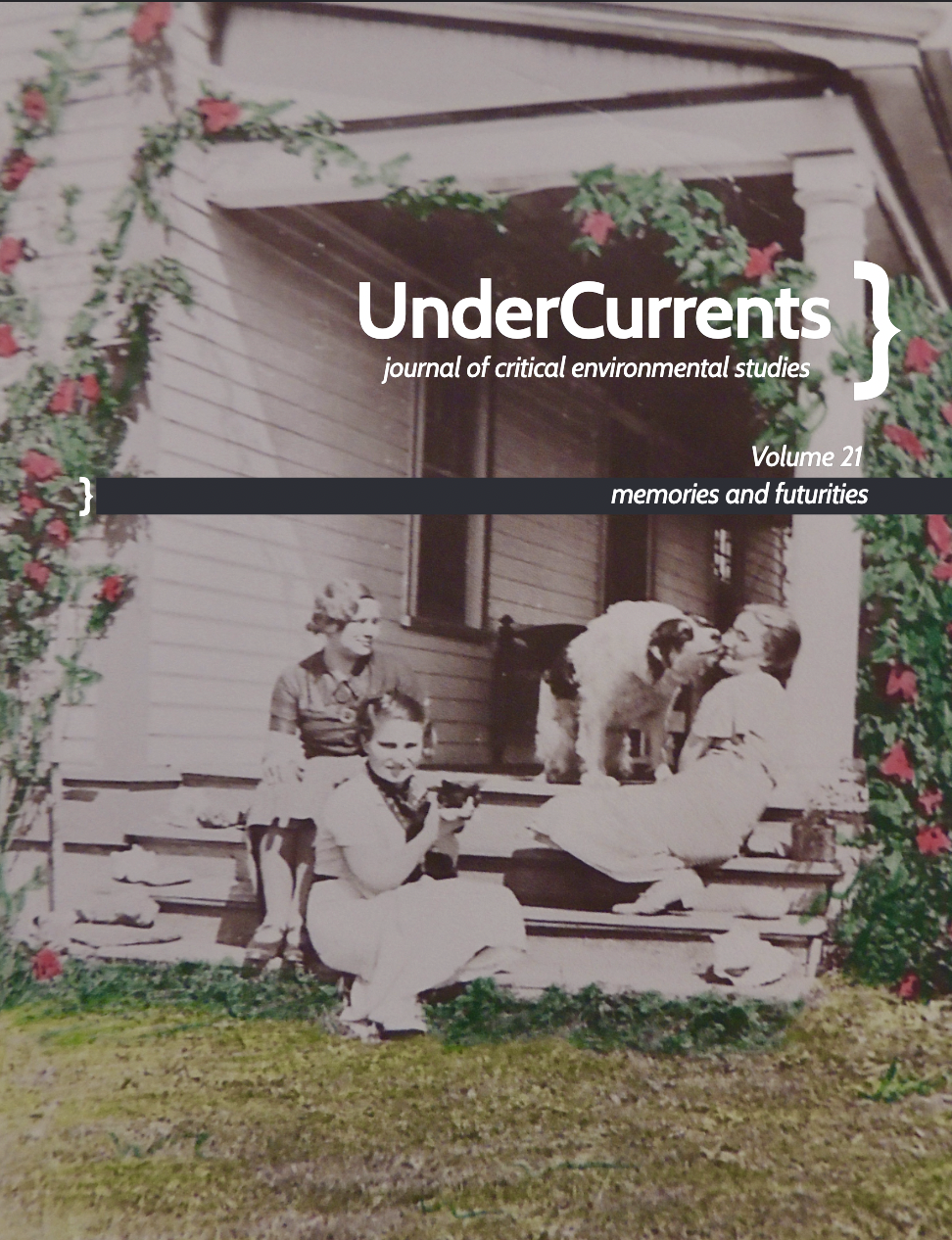
Chemical Futures and Environmental Data Justice
M. Murphy. “Chemical Futures and Environmental Data Justice.” UnderCurrents: Journal of Critical Environmental Studies, no. 21 (2022): 45-48.
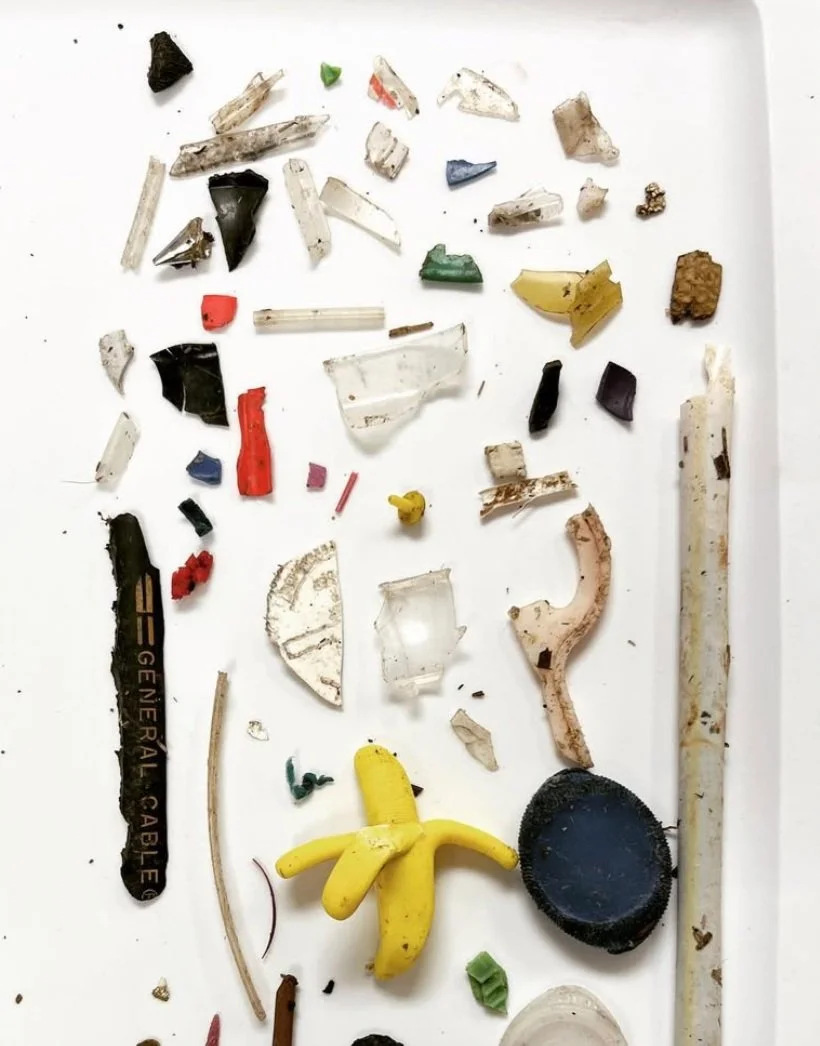
Finding a Good Starting Place: An Interview with Scholars in the CLEAR Lab
Yanchapaxi, María Fernanda, Max Liboiron, Katherine Crocker, Deondre Smiles, and Eve Tuck. 2022. “Finding a Good Starting Place: An Interview with Scholars in the CLEAR Lab.” Curriculum Inquiry 52 (2): 162–70.
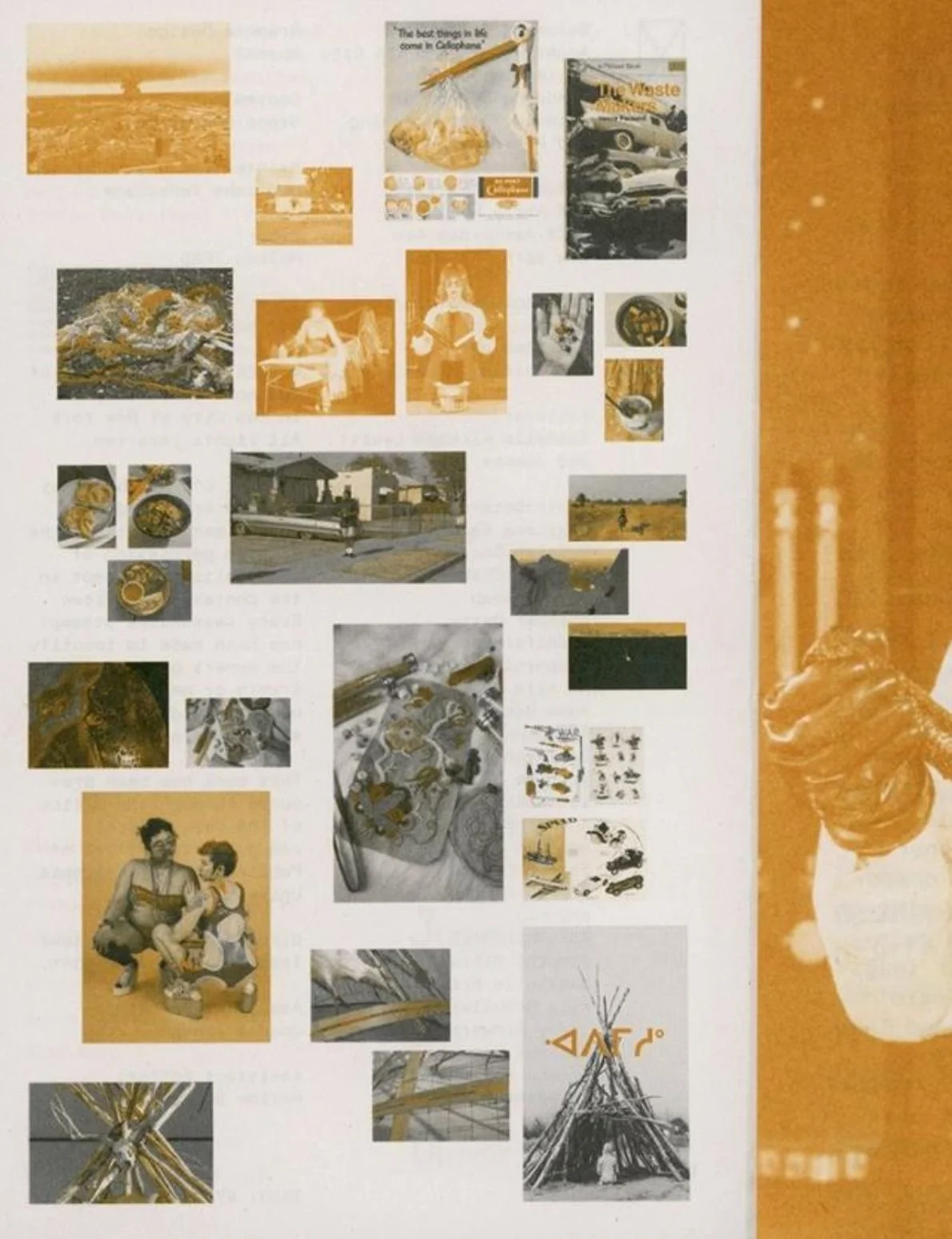
Image courtesy of the CLEAR Lab Instagram
Indigenous Environmental Data Justice: Confronting Colonial Data and Activating Indigenous Sovereignty
Yanchapaxi, María Fernanda, and M. Murphy. “Indigenous Environmental Data Justice: Confronting Colonial Data and Activating Indigenous Sovereignty.” Science, Technology, & Human Values (2025). https://journals.sagepub.com/doi/10.1177/01622439251343837
Read Here
Seed Bead Inheritances and Other Toxicities*
Bos, Kristen. 2023. “Seed Bead Inheritances and Other Toxicities.” In Sketches on Everlasting Plastics, edited by Isabelle Kirkham-Lewitt and Joanna Joseph. Columbia Books on Architecture and the City.
*This piece was also displayed and circulated with original media from artist Claire Johnston (Red River Métis) at the US Pavilion at the Venice Architecture Biennale, May 20, 2023-November 26, 2023.
Expand the lists below for recommended readings in the areas of Environmental Data Justice, Chemicals & Ethical Substance, and Indigenous Science Technology & Environment. Materials authored by TRU Lab members (past and present) are bolded, while other recommended texts are from Indigenous scholars and communities we collaborate with or whose work we admire. If you don’t have access to any of these texts, contact us or the lead author for a copy.
-
Gray, Beze, Joel Piche, Layla El‑Dakhakhni, and Vanessa Gray. “Understanding Our Surroundings — Tanks.” The Journal: Serving Sarnia‑Lambton, March 12, 2025. https://www.thesarniajournal.ca/opinion/opinion-opinion-understanding-our-surroundings-tanks-10364915.
Gray, Beze, Joel Piche, Layla El‑Dakhakhni, and Vanessa Gray. “Community Voice: Suncor’s Crude Oil Spill on the Gchigami‑Ziibii (St. Clair River).” The Journal: Serving Sarnia‑Lambton, April 25, 2025. https://www.thesarniajournal.ca/opinion/community-voice-suncors-crude-oil-spill-on-the-gchigami-ziibii-stclair-river-10563617.
TRU EDJ Lab. “Ada Lockridge: Motherhood Through Data Kinship and Anishinabek Teachings.” The Land and the Refinery, 2024. https://www.landandrefinery.org/projects/adas-data
Murphy, M., Vanessa Gray, Beze Gray, Fernanda Yanchapaxi, and Kristen Bos. 2023. “Pollution Notification Map.” 2023. https://www.landandrefinery.org/projects/pollution-notification-map
Murphy, M. “Some Keywords Towards Decolonial Methods: Studying Settler Colonial Histories and Environmental Violence from Tkaronto.” History and Theory: Studies in the Philosophy of History 59, no. 3 (2020): 376–84. https://doi.org/10.1111/hith.12165
Wiebe, Andrew. “Zoom’s Scrapped Proposal to Mine User Data Causes Concern about Our Virtual and Private Indigenous Knowledge.” The Conversation, August 15, 2023. https://theconversation.com/zooms-scrapped-proposal-to-mine-user-data-causes-concern-about-our-virtual-and-private-indigenous-knowledge-211577
TRU EDJ Lab. “Community Reimagining Pollution Data.” The Land and the Refinery (2022). https://www.landandrefinery.org/projects/reimagining-pollution-data
Dillon, Lindsey, Rebecca Lave, Becky Mansfield, Sara Wylie, Nicholas Shapiro, Anita Say Chan, and M. Murphy. “Situating Data in a Trumpian Era: The Environmental Data and Governance Initiative.” Annals of the American Association of Geographers 109, no. 2 (2019): 545–55. https://doi.org/10.1080/24694452.2018.1511410
Walker, Dawn, Eric Nost, Aaron Lemelin, Rebecca Lave, and Lindsey Dillon. 2018. “Practicing Environmental Data Justice: From DataRescue to Data Together.” Geo: Geography and Environment 5, no. 2.
Paris, Britt S., Lindsey Dillon, Jennifer Pierre, Irene V. Pasquetto, Emily Marquez, Sara Wylie, M Murphy, et al. 2017. “Pursuing A Toxic Agenda: Environmental Injustice in the Early Trump Administration.” Environmental Data & Governance Initiative. https://envirodatagov.org/publication/pursuing-toxic-agenda.
Fan, Fa-ti, Shun-Ling Chen, Chia-Liang Kao, M. Murphy, Matt Price, and Liz Barry. “Citizens, Politics, and Civic Technology: A Conversation with G0v and EDGI.” East Asian Science, Technology and Society 13, no. 2 (2019): 279–97. https://doi.org/10.1215/18752160-7542932
Vera, Lourdes A, Dawn Walker, M. Murphy, Becky Mansfield, Ladan Mohamed Siad, and Jessica Ogden. “When Data Justice and Environmental Justice Meet: Formulating a Response to Extractive Logic through Environmental Data Justice.” Information, Communication & Society 22, no. 7 (2019): 1012–28. https://doi.org/10.1080/1369118X.2019.1596293
Dillon, Lindsey, Christopher Sellers, Vivian Underhill, Nicholas Shapiro, Jennifer Liss Ohayon, Marianne Sullivan, Phil Brown, Jill Harrison, and Sara Wylie. “The Environmental Protection Agency in the Early Trump Administration: Prelude to Regulatory Capture.” American Journal of Public Health 108, no. S2 (2018): S89–94. https://doi.org/10.2105/AJPH.2018.304360
Murphy, M. “Against Population, Towards Alterlife.” In Making Kin Not Population, edited by Adele E. Clarke and Donna J. Haraway, 101-124. Chicago, IL: Prickly Paradigm Press, 2018.
Murphy, M., Max Liboiron, Natasha Myers, Dayna Scott, and Reena Shadaan. 2017. “Pollution Is Colonialism.” Endocrine Disruptors Action Group and CLEAR, September. https://endocrinedisruptorsaction.org/2017/09/18/pollution-is-colonialism/.
Sellers, Christopher, Lindsey Dillon, Jennifer Liss Ohayon, Nick Shapiro, Marianne Sullivan, Chris Amoss, Stephen Bocking, et al. 2017. “The EPA Under Siege.” Environmental Data & Governance Initiative. https://envirodatagov.org/publication/the-epa-under-siege.
Pariyadath, Renu, and Reena Shadaan. 2014. “Solidarity after Bhopal: Building a Transnational Environmental Justice Movement.” Environmental Justice 7 (5): 146–50. https://doi.org/10.1089/env.2014.0013.
Shadaan, Reena. 2014. “I Know about My Own Body.... They Lied": Environmental Justice, and the Contestation of Knowledge Claims in Institute, WV, and Old Bhopal, India.” Canadian Woman Studies 31 (1–2).
-
Shadaan, Reena. ““It’s a Mixture of Emotions”: Nail Technicians’ Visual Storytelling of Work and Health.” Qualitative Research in Medicine & Healthcare 9, no. 1 (2025): 1–11. https://doi.org/10.1016/j.qrmh.2025.100003
Shadaan, Reena, and Bridget Buglioni. ““We Are Actually Remade by Each Other”: A Conversation with Dr. Thuy Linh Nguyen Tu.” Women and Environments International Magazine (2024): 42–47. https://www.yorku.ca/weimag/CURRENTISSUE/images/102_WEI_Final.pdf
Shadaan, Reena. “Multiscalar Toxicities: Counter-Mapping Worker’s Health in the Nail Salon.” Labour / Le Travail 93 (2024):195–222. https://doi.org/10.52975/llt.2024v93.010Shadaan, Reena. “Healthier Nail Salons: From Feminized to Collective Responsibilities of Care.” Environmental Justice no. 16 (2023): 62–71. https://doi.org/10.1089/env.2021.0097
Liboiron, Max. “Why Pollution Is as Much about Colonialism as Chemicals — Don’t Call Me Resilient Transcript EP 11.” The Conversation, November 3, 2021. https://theconversation.com/why-pollution-is-as-much-about-colonialism-as-chemicals-dont-call-me-resilient-transcript-ep-11-170697
Murphy, M., and Konstantin Georgiev. July 17, 2020. “Technoscience: Season 1.” https://open.spotify.com/episode/1m5UebvFHtNUMdd56k53SR
Murphy, M. “Alterlife and Decolonial Chemical Relations.” Cultural Anthropology 32, no. 4 (2017): 494–503. https://doi.org/10.14506/ca32.4.02
Shadaan, Reena. 2016. “Boycotts, Divestment and the Bhopal Movement: An Interview with Rachna Dhingra.” Women and Environments International, 96/97, 10-13.
Murphy, M., Max Liboiron, Natasha Myers, Dayna Scott, Reena Shadaan, and Jessica Caprusso. 2016. “Toxic by Design: Eliminating Harmful Flame Retardant Chemicals from Our Bodies, Homes, & Communities.” Endocrine Disruptors Action Group and CLEAR, October. https://endocrinedisruptorsaction.org/2016/10/11/toxic-by-design/.
Murphy, M. “Not Knowing about the Chemicals in Our Bodies.” Canada Watch (2015): 23-25. https://doi.org/10.25071/8t34bf31
Shadaan, Reena. 2014. “Mahila shakti aa rahi hai… phool nahi chingari hai! Celebrating women-activists: Rashida Bi, Champa Devi Shukla and the Chingari Awards.” Women and Environments International Magazine, 92/93, 33-34.
Murphy, M. “Chemical Infrastructures of the St Clair River.” In Toxicants, Health and Regulation since 1945, edited by Nathalie Jas and Soraya Boudia, 103-116. New York: Routledge, 2013.
Murphy, M. “Chemical Regimes of Living.” Environmental History 13, no. 4 (2008): 695–703. http://www.jstor.org/stable/25473297
Murphy, M. “Exposed On the Inside.” Log (New York, NY), no. 10 (2007): 109–14. http://www.jstor.org/stable/41765168
-
More Worlds Collective, Masco, J., Choy, T., Jake, & Murphy, M. (2025). Fear of a dead white planet. Duke University Press.
Yanchapaxi, María Fernanda, and M. Murphy. “Indigenous Environmental Data Justice: Confronting Colonial Data and Activating Indigenous Sovereignty.” Science, Technology, & Human Values (2025).https://journals.sagepub.com/doi/10.1177/01622439251343837
Bos, Kristen. Forthcoming. The Interrogation Room. Alchemy by Knopf.Wiebe, Andrew. “We Can Learn a Lot from Beaver Dams — According to Both Indigenous Oral History and NASA Researchers.” The Conversation, November 20, 2024. https://theconversation.com/when-building-indigenous-infrastructure-build-relationally-like-beavers-239553
Wiebe, Andrew. “Born from Lithium Minds: A Guide on Mapping Digital Kinship.” iJournal 10, no. 1 (2024): 49–63.
Hamraie, Aimi, and Max Liboiron. Oct 30, 2024. “Solidarity Chat 9: Max Liboiron.” https://www.criticaldesignlab.com/podcast/episode-32
Pyne, Stephanie, David Valeri, and Andrew Wiebe. “Mapping Assiniboia Residential School Survivor Stories: Did You See Us?” Cartouche, no. 100 (2023): 20–22.
Bos, Kristen, and Daniella Sanader. 2021. “Turning the Tables on Research: A Q&A with Kristen Bos of U of T’s Technoscience Research Unit.” Art Museum at the University of Toronto. September 21, 2021. https://artmuseum.utoronto.ca/virtual-spotlight/turning-the-tables-on-research-a-qa-with-kristen-bos-of-u-of-ts-technoscience-research-unit/
EDAction & Civic Laboratory for Environmental Action Research (CLEAR). 2018. “Pollution Is Colonialism.” Society for the Diffusion of Useful Knowledge, 2018. http://archive.blackwoodgallery.ca/publications/SDUK_01_Grafting.pdf
Murphy, M. “What Can’t a Body Do?” Catalyst (San Diego, Calif.) 3, no. 1 (2017): 1–15. https://doi.org/10.28968/cftt.v3i1.28791
Editorial Board. “Introduction to the Inaugural Issue of Catalyst.” Catalyst (San Diego, Calif.) 1, no. 1 (2015): 1-11. https://doi.org/10.28968/cftt.v1i1.28823
Murphy, M., Paisley Currah, and Monica J Casper. “Distributed Reproduction.” In Corpus, edited by Monica J. Casper and Paisley Currah, 21–38. New York: Palgrave Macmillan US, 2011. https://doi.org/10.1057/9780230119536_2
-
Konsmo, Erin. 2022. "The scale of our relations: Reflections on the practice of fish scale art." Refractions: A Journal of Postcolonial Cultural Criticism no. 1.https://www.refractionsajournalofpostcolonialculturalcriticism.com/konsmo
Benjamin, Ruha. 2016a. “Catching Our Breath: Critical Race STS and the Carceral Imagination.” Engaging Science, Technology, and Society 2 (July):145–56.https://doi.org/10.17351/ests2016.70.
———. 2016b. “Informed Refusal: Toward a Justice-Based Bioethics.” Science, Technology, & Human Values 41 (6): 967–90.https://doi.org/10.1177/0162243916656059.
———. 2022. Viral Justice: How We Grow the World We Want. Princeton, New Jersey: Princeton University Press.
Coburn, Elaine, Aileen Moreton-Robinson, George Sefa Dei, and Makere Stewart-Harawira. 2013. “Unspeakable Things: Indigenous Research and Social Science.” Socio, no. 2 (December), 331–48.https://doi.org/10.4000/socio.524.
“Curiosities (My Heart Makes My Head Swim).” 2020. In Dear Science and Other Stories, by Katherine McKittrick, 1–13. Duke University Press.https://doi.org/10.1515/9781478012573-002.
Duarte, Marisa Elena. 2017. Network Sovereignty: Building the Internet across Indian Country. Indigenous Confluences. Seattle: University of Washington.
Hobart, Hiʻilei Julia. 2022. Cooling the Tropics: Ice, Indigeneity, and Hawaiian Refreshment. Elements. Durham: Duke University Press.
Kolopenuk, Jessica. 2020. “Miskâsowin: Indigenous Science, Technology, and Society.” Genealogy 4 (1): 21.https://doi.org/10.3390/genealogy4010021.
LaDuke, Winona, and Deborah Cowen. 2020. “Beyond Wiindigo Infrastructure.” South Atlantic Quarterly 119 (2): 243–68.https://doi.org/10.1215/00382876-8177747.
Liboiron, Max. 2021. Pollution Is Colonialism. Durham London: Duke University Press.
Maynard, Robyn, and Leanne Simpson. 2022. Rehearsals for Living. Toronto: Alfred A. Knopf.
McKittrick, Katherine. 2014. “Mathematics Black Life.” The Black Scholar 44 (2): 16–28.https://doi.org/10.1080/00064246.2014.11413684.
———. 2021. Dear Science and Other Stories. Errantries. Durham London: Duke University Press.https://doi.org/10.1515/9781478012573.
Murphy, M. 2017. “Alterlife and Decolonial Chemical Relations.” Cultural Anthropology 32 (4): 494–503.https://doi.org/10.14506/ca32.4.02.
Rodriguez-Lonebear, Desi. 2016. “Building a Data Revolution in Indian Country.” In Indigenous Data Sovereignty: Toward an Agenda, edited by Tahu Kukutai and John Taylor, 253–72. ANU Press.
Simmons, Kristen. 2017. “Settler Atmospherics.” Cultural Anthropology (blog). November 20, 2017.https://culanth.org/fieldsights/settler-atmospherics.
Simpson, Leanne. 2021. A Short History of the Blockade: Giant Beavers, Diplomacy, and Regeneration in Nishnaabewin. CLC Kreisel Lecture Series. Edmonton, Alberta: University of Alberta Press.
Todd, Zoe. 2017. “Fish, Kin and Hope: Tending to Water Violations in Amiskwaciwâskahikan and Treaty Six Territory.” Afterall: A Journal of Art, Context and Enquiry 43 (March):102–7.https://doi.org/10.1086/692559.
Walter, Maggie. 2016. Indigenous Statistics: A Quantitative Research Methodology. London New York: Routledge.https://doi.org/10.4324/9781315426570.
Watson-Verran, Helen, and David Turnbull. 1995. “Science and Other Indigenous Knowledge Systems.” In Handbook of Science and Technology Studies, by Sheila Jasanoff, Gerald Markle, James Peterson, and Trevor Pinch, 114–39. 2455 Teller Road, Thousand Oaks California 91320 United States of America: SAGE Publications, Inc.https://doi.org/10.4135/9781412990127.n6.
Watts, Vanessa. 2013. “Indigenous Place-Thought & Agency amongst Humans and Non-Humans (First Woman and Sky Woman Go on a European World Tour!).” Decolonization: Indigeneity, Education & Society 2 (1): 20–34.
Whyte, Kyle. 2017. “Indigenous Climate Change Studies: Indigenizing Futures, Decolonizing the Anthropocene.” English Language Notes 55 (1–2): 153–62.https://doi.org/10.1215/00138282-55.1-2.153.
Yang, K. Wayne. 2017. A Third University Is Possible. Forerunners: Ideas First from the University of Minnesota Press. Minneapolis: University of Minnesota Press.
-
Adams, Melinda M. 2024. “Indigenous Fire Data Sovereignty: Applying Indigenous Data Sovereignty Principles to Fire Research.” Fire 7 (7): 222. https://doi.org/10.3390/fire7070222.
Carroll, Stephanie Russo, Marisa Duarte, Max Liboiron. 2024. “Indigenous Data Sovereignty.” In “Keywords of the Datafied State.” by Burrell, Jenna, Ranjit Singh, and Patrick Davison. SSRN Electronic Journal, 2024. https://doi.org/10.2139/ssrn.4734250.
Carroll, Stephanie Russo, Edit Herczog, Maui Hudson, Keith Russell, and Shelley Stall. 2021. “Operationalizing the CARE and FAIR Principles for Indigenous Data Futures.” Scientific Data 8 (1). Nature Publishing Group: 108. doi:10.1038/s41597-021-00892-0.
Carroll, Stephanie Russo, Ibrahim Garba, Oscar L. Figueroa-Rodríguez, Jarita Holbrook, Raymond Lovett, Simeon Materechera, Mark Parsons, et al. 2020. “The CARE Principles for Indigenous Data Governance.” Data Science Journal 19 (November):43. https://doi.org/10.5334/dsj-2020-043.
David-Chavez, Dominique M., Michael C. Gavin, Norma Ortiz, Shelly Valdez, and Stephanie Russo Carroll. 2024. “A Values-Centered Relational Science Model: Supporting Indigenous Rights and Reconciliation in Research.” Ecology and Society 29 (2). https://doi.org/10.5751/ES-14768-290211.
Hudson, Maui, Stephanie Russo Carroll, Jane Anderson, Darrah Blackwater, Felina M. Cordova-Marks, Jewel Cummins, Dominique David-Chavez, et al. 2023. “Indigenous Peoples’ Rights in Data: A Contribution toward Indigenous Research Sovereignty.” Frontiers in Research Metrics and Analytics 8 (May):1173805. https://doi.org/10.3389/frma.2023.1173805.
Lovett, Raymond, Vanessa Lee, Tahu Kukutai, Donna Cormack, Stephanie Carroll Rainie, and Jennifer Walker. n.d. “2: GOOD DATA PRACTICES FOR INDIGENOUS DATA SOVEREIGNTY AND GOVERNANCE.” In , 26–36.
Rainie, Stephanie Carroll, Tahu Kukutai, Maggie Walter, Oscar Luis Figueroa-Rodriguez, Jennifer Walker, and Per Axelsson. 2019. “Issues in Open Data: Indigenous Data Sovereignty.” Magazine. State of Open Data. African Minds; International Development Research Center.
https://www.d4d.net/state-of-open-data/chapters/issues/indigenous-data/v1
Taylor, John, and Tahu Kukutai, eds. 2016. Indigenous Data Sovereignty: Toward an Agenda. Acton, ACT, Australia: Australian National University Press.
Walter, Maggie, ed. 2021. Indigenous Data Sovereignty and Policy. Routledge Studies in Indigenous Peoples and Policy. Abingdon, Oxon ; New York, NY: Routledge.
Walter, Maggie, and Michele Suina. 2019. “Indigenous Data, Indigenous Methodologies and Indigenous Data Sovereignty.” International Journal of Social Research Methodology 22 (3): 233–43. https://doi.org/10.1080/13645579.2018.1531228.
Collaborations
The Technoscience Research Unit is rooted in collaborative practices with the intention of supporting and cultivating different forms of shared knowledge and experiences. At the heart of our collaborations is our commitment to decolonializing, justice-oriented, and feminist research.
Acceleration Consortium
(2024 - present)
The TRU is the social science lab of the Acceleration Consortium (AC), which is leading a transformative shift to accelerate materials discovery informed by ethics, economics, and Indigenous science and technology studies. To learn more about our collaboration, visit the Indigenous Science & Ethical Substance page on our website.
IndigeLab Network
(2023 - present)
The IndigeLab Network focuses on how Indigenous-led research collectives work and make change. We support one another in the usually behind-the-scenes knowledges and methods of bringing Indigenous methodologies and theories of change into the social worlds of labs, studios, portfolios, centers, and other research collectives, especially when they are based in colonial institutions. The IndigeLab Network (IN) currently includes 19 Indigenous women and gender minority researchers who lead unique research collectives that make room for Indigenous ways of knowing, doing, and being in the academy. To learn more, visit the IndigeLab website.
Knowledge Media and Design Institute (KMDI)
(2017 - 2024)
From 2017 to 2024, the TRU was part of the Semaphore Research Cluster and Knowledge Media Design Institute (KMDI), a multidisciplinary research institute based out of the Faculty of Information at the University of Toronto. The KMDI is dedicated to exploring the complex relationships between information, technology and society, with the aim of advancing social justice through human-centered design.
Catalyst Journal
(2015 - present)
Catalyst: Feminism, Theory, and Technoscience is a peer-reviewed journal that serves the expanding interdisciplinary field of feminist science and technology studies (STS) by supporting theoretically inventive and methodologically creative scholarship incorporating approaches from critical public health, disability studies, sci-art, technology and digital media studies, history and philosophy of science and medicine, and more. M. Murphy is a founding member and ongoing member of the editorial collective for the journal, which is housed by the University of Toronto Library open source journal project. From 2017-2019, the TRU provided funding support for Catalyst operations with generous support from the Faculty of Information and Women and Gender Studies.
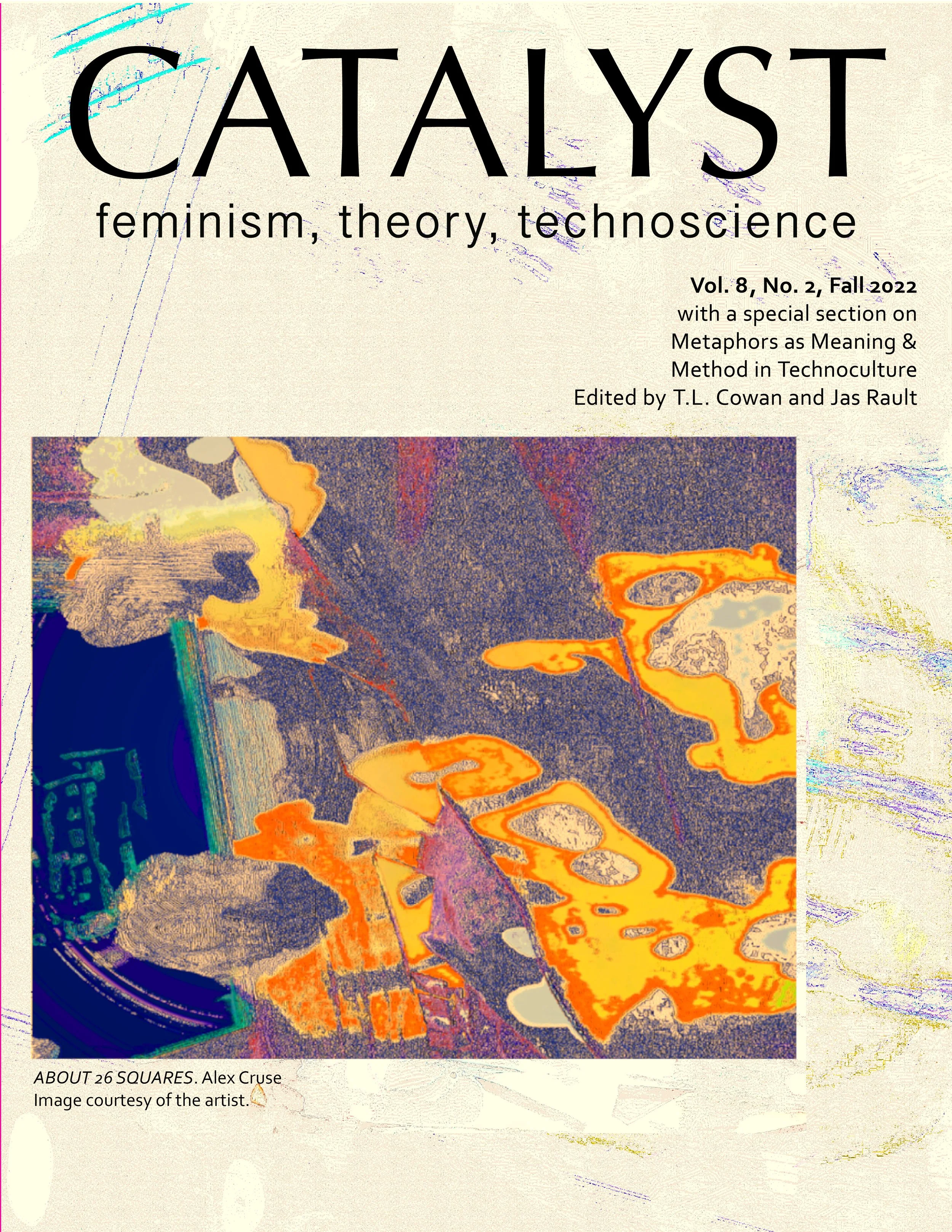
The TRU is proud to be part of the distributed editorship collective caring for Catalyst, an online and open journal for feminist STS.
Catalyst: Feminism, Theory, and Technoscience serves the expanding interdisciplinary field of feminist science and technology studies (STS) by supporting theoretically inventive and methodologically creative scholarship incorporating approaches from critical public health, disability studies, sci-art, technology and digital media studies, history and philosophy of science and medicine, and more.
Catalyst publishes peer-reviewed critically and theoretically engaged feminist STS scholarship that reroutes the gendered, queer, raced, colonial, militarized, and political economic beings and doings of technoscience. Its mission is to support innovation in feminist STS and related areas of study, as well as to provide a venue for the publishing of activist feminist and critical theory concerning matters of science, technology, information, medicine, media, and more.
A contribution that distinguishes Catalyst from other science studies journals is its emphasis on building, expanding, and applying theoretical insights from across the arts and humanities, the social sciences, and scientific practice. Featuring both empirical and hermeneutic essays and projects anchored in theory, Catalyst offers a place to collectively work across disciplines on gendered subjectivities and the uneven materializations of power across technoscientific assemblages of sex, race, nation, class, and ability.
The journal is designed to serve as a bridge linking new and more familiar sites of feminist technoscience study and practice, including STS programs at institutions such as York University and the University of California at San Diego, as well as multiple working groups and open forums such as the Catalyst Lab at UCSD, the University of Toronto’s Technoscience Research Unit, the international FemTechNet, and Life (Un)Ltd., a research initiative of the UCLA Center for the Study of Women (see Affiliations for details).
TRU Project Archives
Environmental
Data Archiving
RaceSci
Website
Historicizing Reproduction
The Politics
of Evidence
Techniques of
the Corporation
Plant
Encounters
Placing
Science
2015 - 2018
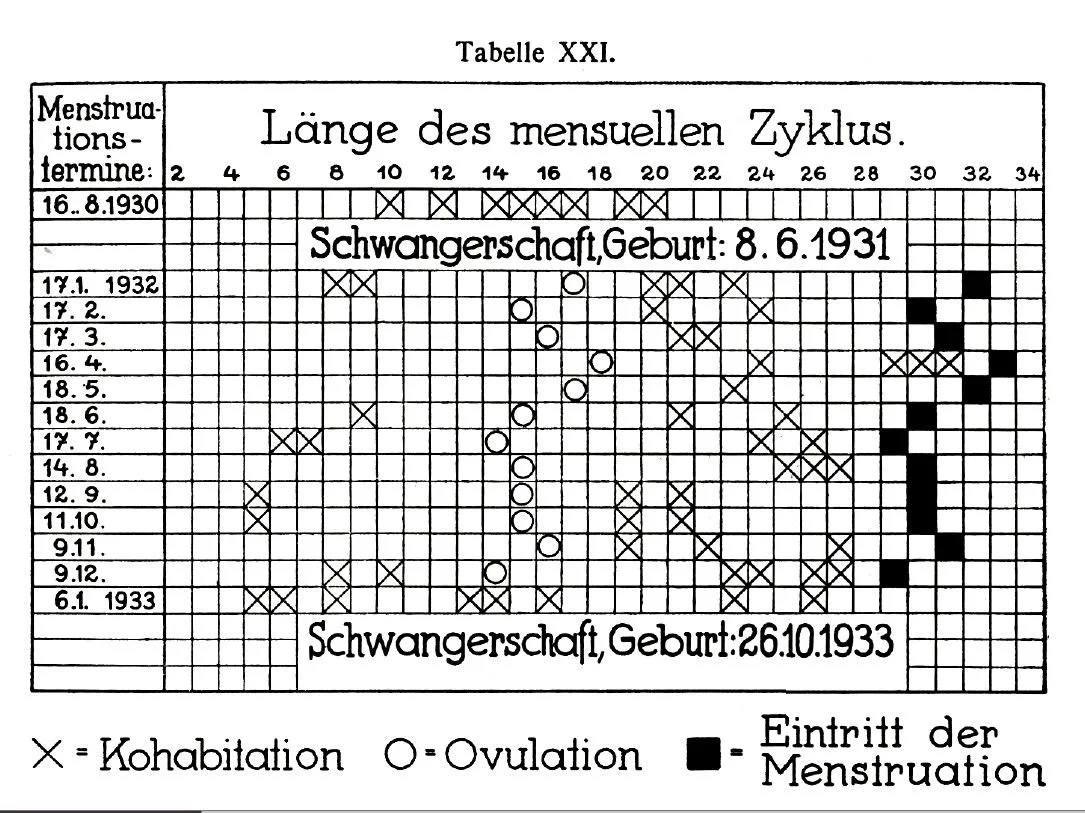
Historicizing Reproduction was a research project led by Martina Schluender in collaboration with M. Murphy about the 20th century as a central period when the “technoscience turn” in reproduction took place. The project was supported by an EU Marie Currie Postdoctoral Fellowship.
2016 - 2017
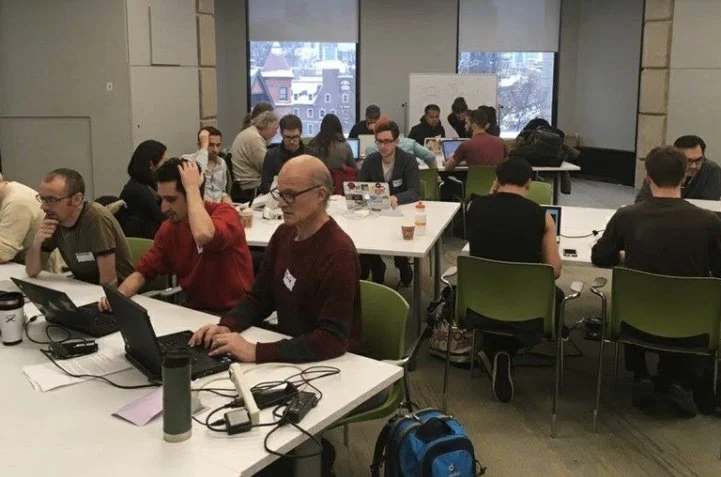
Environmental Data Archiving was a project co-organized by TRU members Michelle Murphy, Matt Price , and Patrick Keilty to archive government environmental and climate data vulnerable to becoming less public accessible or lost in the transition to the new presidential administration. This project was part of EDGI and its Data Rescue work in collaboration with the DataRefuge project at University of Pennsylvania and the Internet Archive.
2017
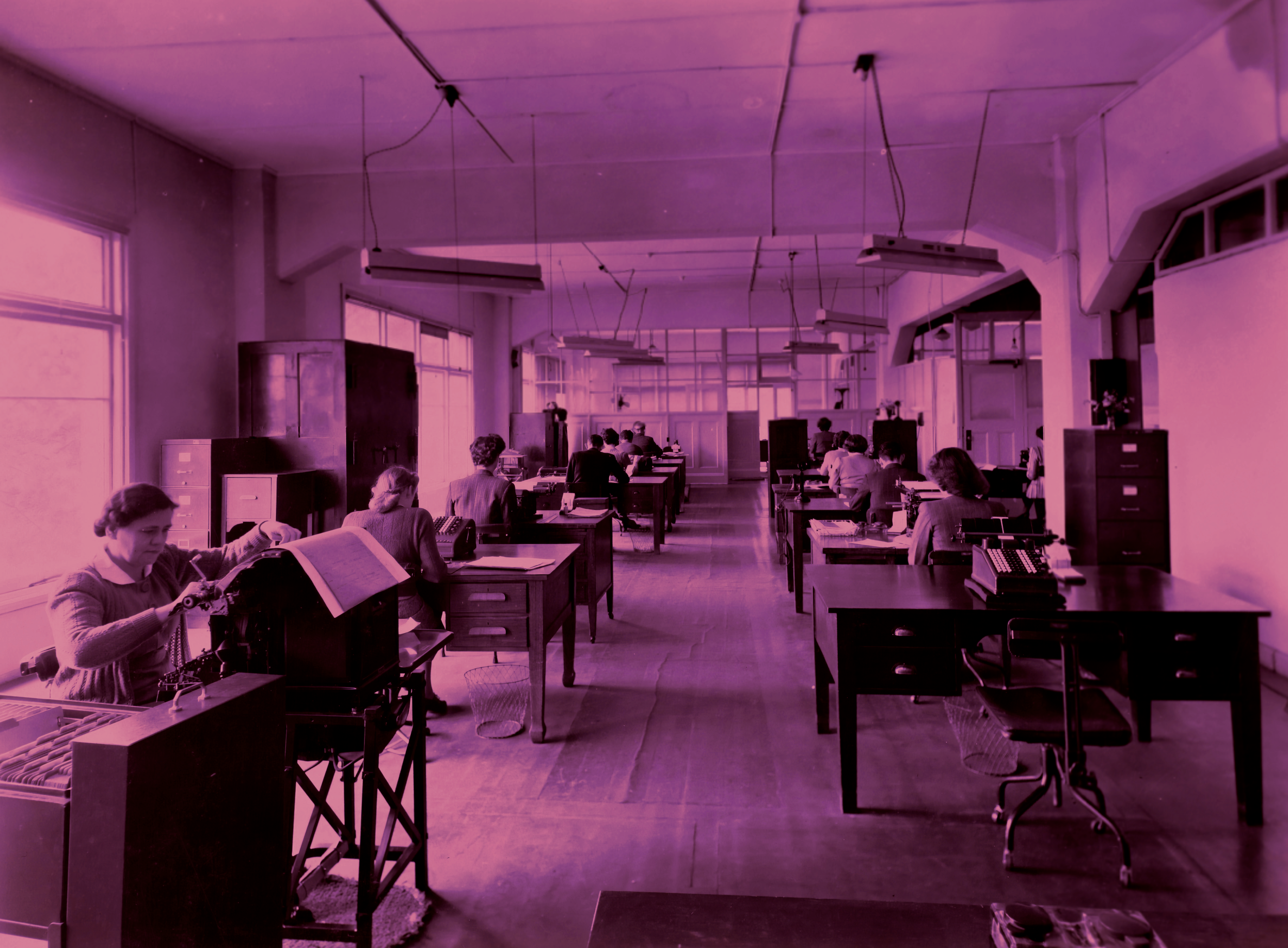
Techniques of the Corporation was a SSHRC funded project from 2016-2018 that critically examined the corporation in the same way that historians of science and STS scholars have approached science, colonialism, and militarism as complex sites for knowledge production, value-making, and technopolitics. This project was co-led by Kira Lussier, Bretton Fosbrook, Justin Douglas and Michelle Murphy)
2017-2023
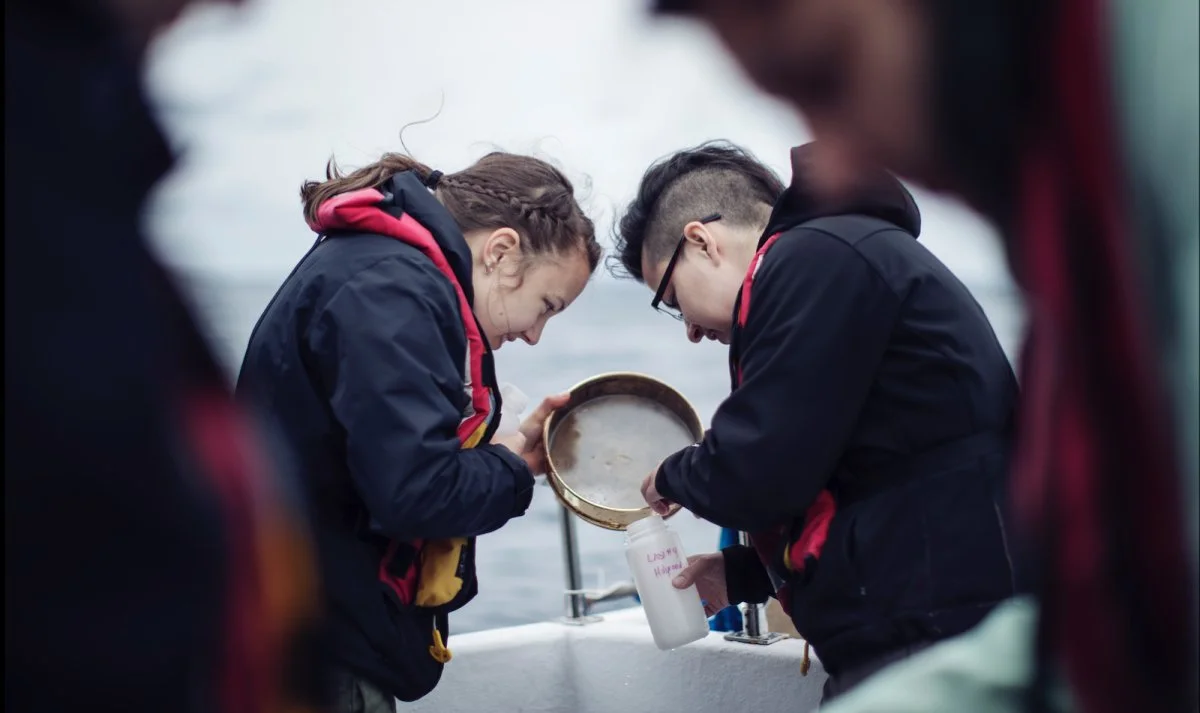
Placing Science was a SSHRC-funded collaborative project about place-based decolonial practices for environmental science research. The project was based at the Civic Laboratory for Environmental Action Research (CLEAR) at the Memorial University of Newfoundland, directed by Max Liboiron.
2011
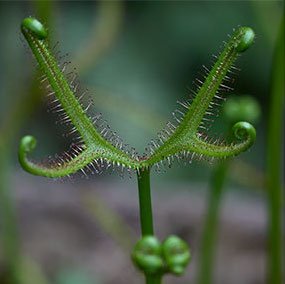
The Plant Encounters Workshop, organized by Carla Hustak, was animated by an inquiry into interdisciplinary approaches to encountering plants as nonhuman others that problematize our ontologies, politics, methodologies, and narrative frameworks
2015 - 2018
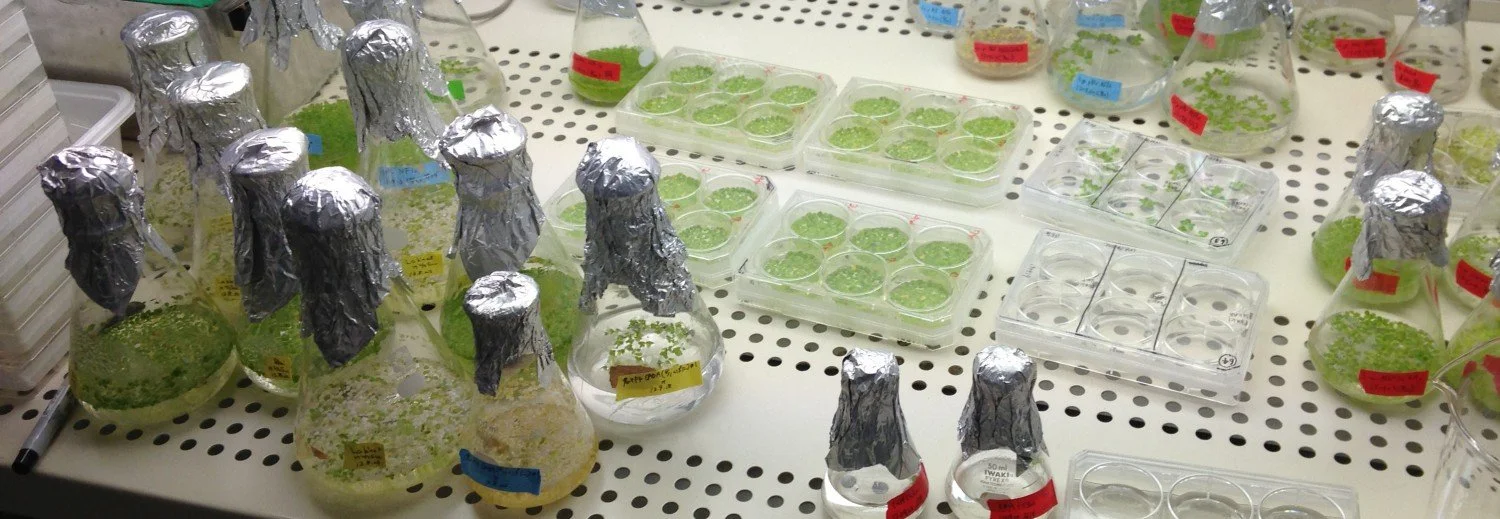
The Politics of Evidence and Our Right to Know Collaboration
Carla Hustak and Michelle Murphy of the TRU are working in collaboration with The Politics of Evidence Working Group, organized by Natasah Myers, on bringing greater attention the to the federal politics of knowledge making and ignorance in Canada. The TRU also has a representative on the organizing committee of the non-profit Our Right to Know, which is coordinating a national network of organizations concerned with the current politics of Canadian science and research.
1996-2006
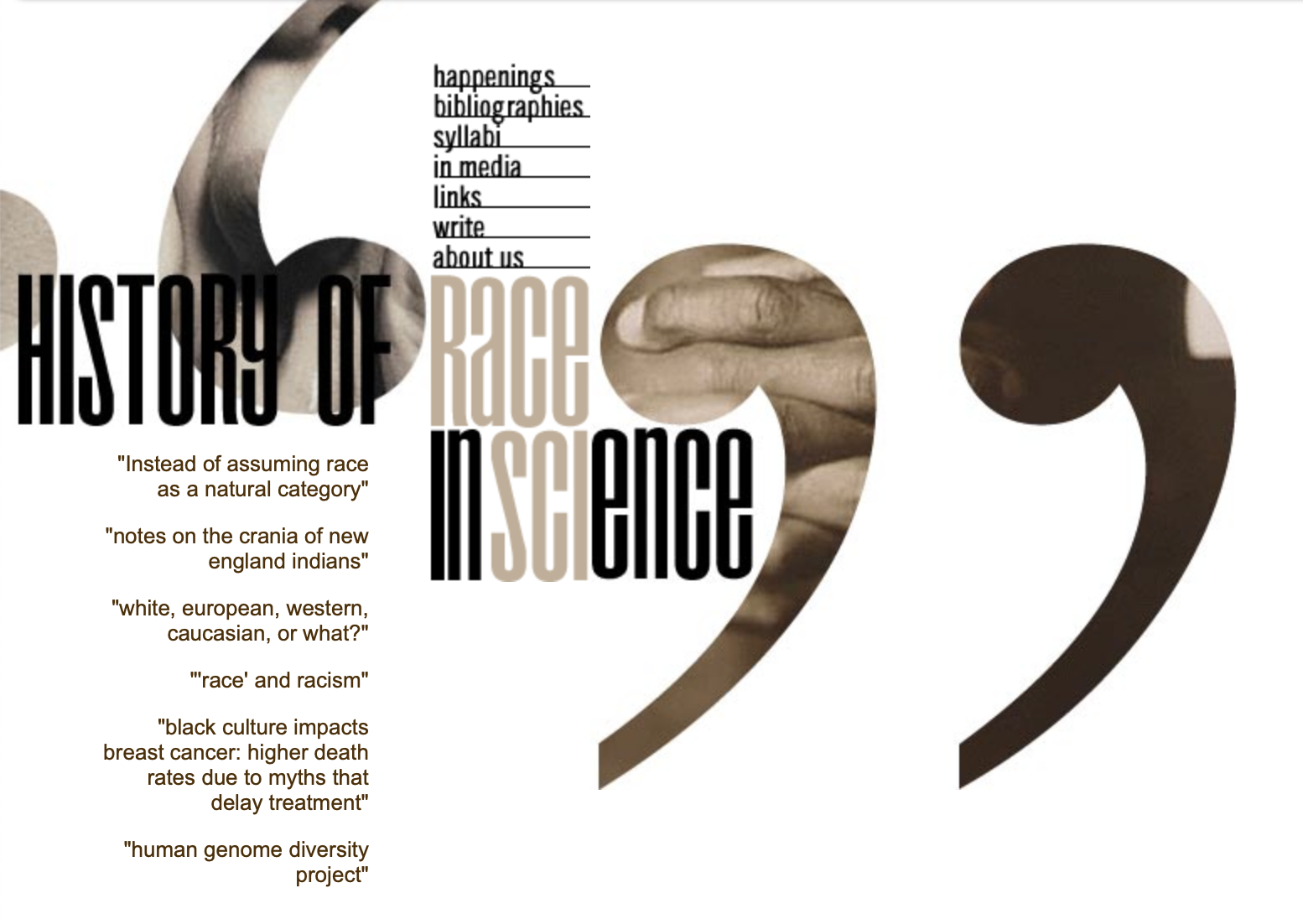
The RaceSci Website was a scholarly forum and database that addressed a longstanding gap in resources for the history of race in science, medicine, and technology.
Sexy
Data
2017
Sexy Data was a SSHRC-funded project led by TRU member Patrick Keilty that examines the strategic choices made by technical staff within the vast and lucrative online pornography industry.